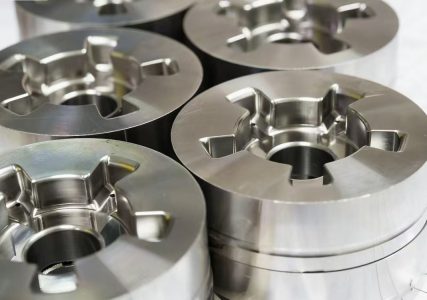
Precision Metal Processing 2026: The Complete Practical Guide
Precision Metal Processing 2026: The Complete Practical Guide
In the dynamic landscape of modern advanced manufacturing, the need for metal components that meet strict dimensional standards, offer consistent performance, and boast superior surface quality has become more critical than ever. This is where precision metal working emerges as a cornerstone technology, encompassing a suite of advanced techniques designed to transform raw metal materials into high-tolerance parts. As we step into 2026, this field has evolved beyond traditional mechanical processing, integrating digitalization, automation, and intelligent monitoring to cater to the rigorous demands of diverse industries—from automotive and medical devices to home appliances and aerospace. This comprehensive guide explores the fundamentals, core technologies, applications, emerging trends, and practical benefits of Precision Metal Processing, while highlighting why choosing the right partner can make all the difference for your projects. For more details on our manufacturing capabilities, visit our internal resource: <a href=”https://www.huazhimould.com/wp-admin”>Huazhi Mould Official Platform</a>.
What Is Precision Metal Processing? Key Definitions & Core Principles
At its essence, Precision Metal Processing refers to a collection of specialized manufacturing techniques focused on producing metal components with extremely tight tolerances—often measured in microns or even sub-microns. Unlike conventional metalworking, which prioritizes basic shaping and may allow for looser dimensional variations, this advanced process centers on consistency, repeatability, and surface perfection. Every step, from material selection to final finishing, is governed by digital systems, automated equipment, and strict quality control protocols to ensure each part aligns perfectly with design specifications.
In 2026, Precision Metal Processing is no longer a standalone machining method but an integrated industrial system. It combines computer-aided design (CAD) and computer-aided manufacturing (CAM) tools, real-time data analysis, digital simulation, and automated production lines to minimize errors, reduce waste, and enhance efficiency. This integration allows manufacturers to tackle complex part designs, meet tight production deadlines, and maintain the high quality standards required in today’s competitive market. For industry insights on the latest advancements, check out this external resource: <a href=”https://www.manufacturing.net”>Manufacturing.net – Professional Metalworking Resources</a>.
Core Technologies Powering Precision Metal Processing
The effectiveness of Precision Metal Processing relies on a diverse range of leading technologies, each tailored to specific material properties, part complexities, and accuracy requirements. These methods work in tandem to deliver consistent, high-quality results across various industries that depend on reliable precision components.
CNC Machining: The Foundation of Modern Precision Work
Computer Numerical Control (CNC) machining serves as the backbone of Precision Metal Processing. This technology uses pre-programmed computer instructions to control machining tools—such as mills, lathes, and drills—ensuring consistent, accurate cuts with minimal human intervention. In 2026, 5-axis CNC machining centers have become the industry standard, allowing for one-time clamping of complex parts. This eliminates cumulative errors caused by multiple repositioning, reduces production time, and enhances overall precision.
CNC systems support a wide range of metal materials, from lightweight aluminum alloys and copper to heavy-duty stainless steel and titanium. They are versatile enough to handle both small-batch prototype production and large-scale mass manufacturing, making them indispensable in supporting stable and efficient Precision Metal Processing for industries worldwide.
EDM Technology: For Hard-to-Cut Materials and Complex Structures
Electrical Discharge Machining (EDM) is a non-contact processing method widely used in Precision Metal Processing. It uses high-frequency electrical sparks to erode metal materials, making it ideal for hard metals, narrow grooves, deep cavities, and microstructures that are difficult or impossible to process with traditional cutting tools. This technology is particularly valuable for mold inserts, medical micro-components, and electronic connectors, where even the smallest dimensional deviation can render a part non-functional.
Modern EDM machines are equipped with closed-loop control systems that monitor and adjust spark intensity in real time, further improving precision and stability. This ensures that every part produced meets the strict tolerances required for high-end applications.
Laser Processing: Speed & Precision for Miniaturized Parts
Laser processing—including laser cutting, welding, and engraving—has become a key part of Precision Metal Processing. It offers exceptional precision, fast processing speeds, and a minimal heat-affected zone, making it ideal for small, delicate parts such as electronic components, medical devices, and 5G/6G communication parts. Unlike traditional tools, lasers do not wear down over time, ensuring consistent results across high-volume production runs.
In 2026, advances in laser technology have expanded its capabilities, allowing for the processing of even the thinnest metal sheets with micron-level accuracy. This has opened up new possibilities for miniaturized products, driving innovation in industries that rely on compact, high-precision components.
Grinding and superfinishing are critical final steps in Precision Metal Processing, used to remove tiny amounts of material and achieve ultra-smooth surfaces and extremely tight dimensional accuracy. These processes are essential for parts that require low friction, high wear resistance, and long-term stability—such as bearings, shafts, and mold cores. Without these finishing steps, even the most precisely machined parts may fail to meet the performance requirements of their intended applications.
Advanced grinding machines with automatic compensation systems adjust for tool wear and temperature changes in real time, ensuring consistent results even during long production runs.
Key Applications of Precision Metal Processing in 2026
Precision Metal Processing supports nearly every advanced manufacturing industry by providing high-quality, reliable components for critical applications. Below are the top sectors leveraging these solutions in 2026.
Automotive Industry: Driving Efficiency & Safety
The automotive industry—especially the electric vehicle (EV) sector—relies heavily on Precision Metal Processing for key components. From engine parts and transmission components to battery shells, motor cores, and sensor housings, high precision is critical to improving vehicle safety, energy efficiency, and durability. For EVs, in particular, lightweight, well-crafted parts help extend battery life and reduce overall vehicle weight, addressing one of the industry’s key challenges.
Manufacturers depend on stable production standards to meet strict industry norms and consumer expectations for reliability.
Medical Devices: Ensuring Safety & Reliability
Medical devices require some of the highest levels of precision available in modern manufacturing, which is why Precision Metal Processing is essential. These advanced techniques are used to manufacture surgical instruments, implantable parts, diagnostic equipment components, and operating room devices. Micron-level accuracy ensures that these parts are safe to use, function reliably, and integrate seamlessly with the human body.
Compliance with global regulations such as FDA standards is non-negotiable, and tight process control ensures every part meets necessary safety and performance benchmarks.
Home Appliances & Electronics: Enhancing Performance & Durability
Home appliances such as air conditioners, refrigerators, washing machines, and small kitchen appliances rely on Precision Metal Processing for motors, valves, pumps, and structural components. High precision reduces noise, improves energy efficiency, and extends product lifespans, making them more reliable and cost-effective for consumers.
In the electronics industry, these processes produce connectors, shielding cases, heat dissipation parts, and chip bases—all requiring tight tolerances to ensure proper functionality. As devices shrink and become more integrated, demand continues to rise.
Aerospace & High-End Equipment
Aerospace components must withstand extreme temperatures, pressure, and vibration, making Precision Metal Processing indispensable. These methods ensure dimensional stability, material strength, and assembly accuracy for aircraft and rocket parts, from engine components to structural brackets. Every part must pass rigorous inspections to meet the industry’s strict safety standards.
Key Advantages
Compared to conventional metal forming, Precision Metal Processing offers clear benefits that make it the first choice for premium manufacturing:
Ultra-high dimensional accuracy, with tolerances down to ±0.001mm
Smooth, burr-free surfaces that improve durability and appearance
High part-to-part consistency ideal for mass production
Compatibility with steel, aluminum, copper, titanium, and special alloys
Lower rejection rates and reduced long-term operational costs
Greater design freedom for complex, custom geometries
These advantages solidify the value of Precision Metal Processing in global industrial development.
2026 Trends Shaping the Industry
As technology advances, Precision Metal Processing continues to evolve to meet global industry demands. Below are the most influential trends in 2026.
Intelligent & Digital Production
AI quality inspection, digital twin simulation, and real-time data monitoring are becoming standard in modern factories. Virtual replicas allow teams to test and optimize workflows before physical production, reducing costs and speeding up launches.
Green & Sustainable Practices
Sustainability is now a core focus in manufacturing. Energy-saving machinery, dry processing, eco-friendly lubricants, and recyclable materials help lower carbon footprints while cutting operational expenses.
Micro-Precision Development
Demand for tiny components in electronics and medical devices is driving growth in micro-scale Precision Metal Processing. New tools and methods allow production of micron-sized parts with extreme accuracy, opening new opportunities for wearable tech, implants, and compact sensors.
Full Automation & Unmanned Lines
Robotic loading, automated inspection, and smart logistics are creating fully unmanned production environments. This reduces labor costs, improves efficiency, and ensures consistent output around the clock.
Why Choose Huazhi Mould for Precision Metal Processing?
When it comes to reliable, high-quality Precision Metal Processing, choosing the right partner directly impacts your project success. Huazhi Mould is a professional enterprise specializing in the design and manufacturing of small to large injection molds, with extensive experience and advanced capabilities in precision component production.
We serve clients in automotive, home appliance, medical, and electronics sectors, delivering customized solutions tailored to your needs.
Advanced Equipment
We invest in state-of-the-art machinery including 5-axis CNC centers, EDM systems, precision grinders, and laser equipment. This ensures every part meets strict quality standards with consistent accuracy.
Strict Quality Control
We implement full-process inspection from raw material intake to final packaging. Our team uses coordinate measuring machines (CMMs) and standardized testing to guarantee compliance with ISO 9001 and industry-specific requirements.
Professional Technical Team
Our engineers and technicians bring years of expertise in optimizing workflows, reducing costs, and solving complex manufacturing challenges. We support everything from prototyping to mass production.
Customized & One-Stop Services
We provide fully tailored solutions, from design optimization to material selection and scheduling. We also offer integrated mold design, production, and assembly services to simplify your supply chain.
What materials are commonly used in Precision Metal Processing?
Stainless steel, aluminum alloy, copper alloy, titanium alloy, brass, high-speed steel, and mold steel are most widely used.
What tolerance levels can Precision Metal Processing achieve?
Standard levels reach ±0.01mm; high-end projects such as medical and aerospace can achieve ±0.001mm or better.
Is Precision Metal Processing suitable for mass production?
Yes. CNC, stamping, and automated lines support high-volume runs with consistent quality.
How long does a typical Precision Metal Processing project take?
Simple parts: 1–3 days. Complex components: 1–2 weeks, depending on material and quantity.
Which industries rely most on Precision Metal Processing?
Automotive, medical devices, electronics, aerospace, home appliances, and communications.
Conclusion
Precision Metal Processing remains a foundational force in modern industry, enabling higher performance, safer products, and more efficient manufacturing across the globe. In 2026, digitalization, intelligence, and sustainability continue to elevate its capabilities, supporting innovation in every major sector.
Whether you are developing automotive systems, medical devices, home appliances, or electronic products, the quality of your metal components directly shapes your market competitiveness. With a trusted manufacturing partner like Huazhi Mould, you gain access to professional expertise, reliable equipment, and consistent results.
https://www.huazhimould.com
Call to Action
Ready to elevate your project with professional Precision Metal Processing? Contact Huazhi Mould today to discuss your needs. Our team will provide a customized plan, strict quality assurance, and on-time delivery for every order.
Start here: <a href=”https://www.huazhimould.com/wp-admin”>Contact Huazhi Mould Now</a> for a free consultation and quote.