
Precision Metal Processing | Complete 2025 Guide for Custom High-Tolerance Metal Component Fabrication
H2: 1. Core Definition & Industrial Background of Precision Metal Processing in 2025
H3:1.1 Standard Industrial Definition & Core Technical Index
Precision Metal Processing refers to a systematic set of refined manufacturing technologies that convert raw metallic stock into finished components with ultra-tight dimensional tolerances, smooth surface finish and stable mechanical performance, standing as the foundational core of modern high-end equipment manufacturing in the global industrial chain of 2025. Unlike conventional rough metal cutting allowing loose tolerance above ±0.1mm, qualified fabrication under this manufacturing category strictly controls dimensional deviation ranging from ±0.001mm to ±0.02mm following ISO 2768 industrial specification, realizing micron-level precision for stainless steel, titanium alloy, aluminum alloy, copper and high-temperature nickel-based alloy. You can browse standardized production parameters, equipment layout and real case showcases via official enterprise portal: https://www.huazhimould.com/wp-admin, which releases updated 2025 technical data monthly for global buyers and engineering designers.
As a multi-disciplinary integrated manufacturing sector combining mechanical cutting, digital control, material science and precision metrology, the field evolves rapidly alongside intelligent manufacturing upgrade in 2025. Global industrial statistics show its worldwide market size has exceeded 1800 billion US dollars by 2025, with annual compound growth rate hitting 8.5%, mainly driven by booming downstream demands from new energy vehicles, medical implant equipment, semiconductor core components and aerospace lightweight structural parts. Many midstream component manufacturers replace traditional coarse processing lines with upgraded refined fabrication workflow to lower defective ratio and enhance finished product stability amid stricter global product certification rules across EU, North America and Southeast Asia markets.
- Dimensional Tolerance Benchmark: Standard finished work controls common part tolerance within ±0.005mm; ultra-precision subdivision reaches ±0.001mm for micro medical and semiconductor fittings
- Surface Roughness Standard: Regular finished parts achieve Ra 0.02μm~Ra1.6μm surface smoothness to satisfy tight assembly and anti-corrosion requirement
- Applicable Raw Materials: Carbon steel, stainless steel 304/316, 6061/7075 aluminum, TC4 titanium, beryllium copper and high-temperature alloy are mainstream blank choices for modern workshop production.
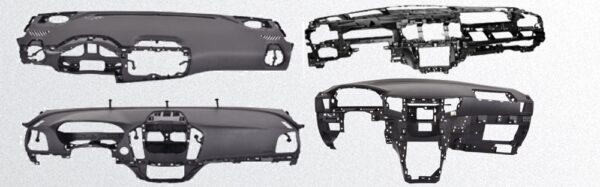
Precision Metal Processing
H3:1.2 Development Evolution & 2025 New Trends of Precision Metal Processing
The development of Precision Metal Processing experiences three critical industrial phases over the past five decades: manual fixture-based precision machining before 1990s, semi-automatic numerical control processing from 1995 to 2015, and current intelligent digital fabrication era starting from 2016 up to 2025. In 2025, three landmark technological transformations reshape whole workshop operation logic: digital twin workshop simulation, AI-driven automatic parameter adjustment and green low-carbon cutting fluid reform, all drastically optimizing cost efficiency and environmental compliance for component manufacturers worldwide.
Traditional workshop production heavily relies on experienced senior technicians to adjust cutting speed, feed rate and tool compensation on-site, inevitably bringing batch-to-batch dimensional fluctuation caused by human operational error. However, updated 2025 generation production system integrates real-time data collection via embedded sensors on five-axis CNC machining centers; artificial intelligence algorithm automatically modifies processing parameters according to real-time workpiece temperature variation and tool abrasion data, cutting human-induced reject rate down by over 42% compared with outdated modes. Meanwhile, eco-friendly water-based biodegradable cutting fluid gradually replaces mineral oil coolant in mainstream production lines to meet global carbon neutrality policy requirements for industrial manufacturing in 2025.
H2:2. Core Processing Technologies Included Within Modern Precision Metal Processing
H3:2.1 Traditional CNC Cutting Core Techniques
CNC turning, milling, boring and grinding compose the most widely used mainstream processing modules inside complete refined production systems, covering over 70% of all custom precision component orders in global market in 2025. Each sub-technique targets specific part structure and precision demand, forming complementary processing combination for finished parts during full production flow:
- Precision CNC Turning: Optimized for rotary axis parts like motor shafts, bolt fittings and bushing sleeves; modern five-axis lathe realizes roundness error below 0.1μm for high-precision spindle components widely used in automation equipment.
- Precision Milling & Five-Axis Machining: Dominant for irregular curved surface, complex cavity and multi-angle structural pieces such as new energy vehicle battery shell and aerospace engine accessories; five-axis linkage equipment enables one-clamp full contour forming, reducing repeated clamping error caused by multiple positioning.
- Ultra-Precision Grinding: Final finishing procedure for high-hardness metal parts; surface grinding, cylindrical grinding and internal grinding cooperate to polish key fitting surfaces, achieving ultra-low roughness required for precision bearing and hydraulic valve core production.
All above CNC cutting steps follow unified process route: raw material blanking → pre-annealing stress relief → rough machining → semi-finishing → precision finish cutting → precision grinding → dimension inspection, standardized to avoid residual internal stress leading to post-production deformation of finished metal components.
H3:2.2 Special Non-Traditional Machining Technologies for Hard-to-Process Materials
For ultra-hard alloy, micro tiny hole and complex inner cavity which conventional cutting cannot handle efficiently, special non-traditional processing serves as essential supplementary branch of complete production solution in 2025, mainly including EDM (Electrical Discharge Machining), wire cutting, laser micro-processing and electrochemical machining (ECM):
- Wire Cut EDM: Core for precision mold insert and ultra-thin metal slice fabrication; can create 0.02mm narrow slit on tungsten steel and high-hardened die steel without mechanical cutting stress, popular for semiconductor lead frame production.
- Laser Precision Ablation: Non-contact thermal processing method for micro-hole drilling and surface pattern etching; minimum machining hole diameter reaches 0.008mm, widely applied for medical implant tiny liquid channel and electronic connector micro via hole fabrication.
- Electrochemical Machining: Cold processing technology without workpiece surface thermal deformation, ideal for high-temperature alloy aerospace turbine blade shaping as one high-end subdivision of advanced component production.
H3:2.3 Post-Treatment Supporting Procedures Completing Precision Metal Processing
Complete component manufacturing cannot be finished only by cutting and forming; standardized post-processing is indispensable to improve finished component’s anti-corrosion, wear resistance and appearance performance, covering cleaning, deburring, heat treatment and surface coating four core categories:
- Precision Deburring: Ultrasonic cleaning and electrolytic deburring remove invisible micro burr leftover after cutting work, avoiding assembly scratch and mechanical jamming during downstream equipment installation.
- Heat Treatment Optimization: Quenching, tempering and stress-relief annealing adjust metal material’s hardness and internal stress status, preventing long-term natural dimensional change of finished precision parts under alternating temperature environment.
- Surface Finishing: Anodizing, nickel plating, PVD coating and passivation serve as final surface treatment options post fabrication to upgrade corrosion resistance for aluminum, copper and stainless steel finished pieces respectively.
H2:3. Key Downstream Application Sectors for 2025 Precision Metal Processing
H3:3.1 Aerospace & Defense Industry: High-End Core Demand
Aerospace manufacturing remains the strictest application field across global industrial layout in 2025, demanding the highest tolerance standard among all downstream industries. Aircraft engine turbine blades, fuselage lightweight aluminum alloy frame, satellite equipment internal precision connectors all rely on customized component production with ±0.002mm strict dimensional limit. Due to extreme high-temperature, high-vibration working environment of aerospace equipment, raw materials for this segment mostly select TC4 titanium alloy and nickel-based superalloy which are difficult to cut, requiring manufacturers to adopt specialized high-rigidity five-axis machine tools and customized tooling solution for stable output.
H3:3.2 Medical Device & Implant Manufacturing: Fast-Growing Market
Medical industry becomes the fastest expanding downstream customer group from 2022 to 2025, driven by global aging population and minimally invasive medical technology popularization. Surgical scalpel, orthopedic titanium bone screw, cardiovascular stent fixture and minimally invasive instrument micro components are core finished goods made via medical-grade refined fabrication, which must comply with FDA and ISO13485 biocompatibility certification besides tight dimensional tolerance. Medical-level production strictly controls workpiece surface cleanliness and residual processing chemical content, eliminating harmful substance precipitation which would cause human body rejection after implant surgery.
H3:3.3 New Energy Vehicle & Automotive Electronic Field
Global new energy vehicle explosive growth in 2025 pushes massive order increment, covering three major auto component categories: new energy battery structural frame, high-voltage conductive copper terminals and auto intelligent sensor metal housing. Compared with traditional fuel vehicle spare parts, EV components need lighter weight and higher dimensional consistency; advanced workshop production helps auto manufacturers reduce component weight by 12%~18% while maintaining structural strength, directly lifting vehicle cruising range performance of finished new energy cars. Many mainstream global auto OEMs establish long-term stable cooperative relationship with qualified suppliers to secure annual batch component supply.
H3:3.4 Semiconductor & Consumer Electronics Micro Component Production
Semiconductor equipment internal clamping fixture, 5G communication radio frequency connector and high-end wearable smartwatch internal structural pieces occupy around 22% global consumption share in 2025, characterized by ultra-small size and ultra-precise dimension demand. Micro subdivision produces parts as tiny as 0.3mm in overall dimension with tolerance down to ±0.001mm, becoming indispensable foundational manufacturing link for domestic and overseas semiconductor equipment localization trend in recent years.
H2:4. Critical Quality Control & Production Standard for Qualified Precision Metal Processing
H3:4.1 Full-Process QC Inspection System of Standard Production
High-quality component fabrication relies on three-stage full-range quality inspection covering raw material incoming check, semi-finished intermediate testing and finished component outbound verification, the core management rule adopted by qualified processing factories including Huazhi Mould displayed at https://www.huazhimould.com/wp-admin:
- Raw Material Incoming Inspection: Spectral analysis verifies metal alloy chemical composition before production starts; hardness test confirms material mechanical performance matches client drawing requirement to avoid wrong stock cutting loss in early production stage.
- In-Process Intermediate Spot Check: On-site QC engineers sample test dimension every two production hours during running production; three-coordinate measuring instrument calibrates key tolerance data and feeds back abnormal parameter to processing operator for immediate equipment adjustment.
- Final Finished Full Inspection: All finished precision parts go through overall dimensional measurement, surface roughness test and anti-rust treatment check after completing full fabrication workflow; defective items are sorted out separately to prevent mixing into qualified delivery batch.
H3:4.2 Key Factors Influencing Final Precision
Multiple external and internal elements directly determine finished part precision stability during on-site execution, which top-tier manufacturers systematically control to minimize production fluctuation in 2025:
- Ambient Temperature Variation: Metal features thermal expansion and cold shrinkage property; professional workshop keeps constant temperature at 20±2℃ to eliminate dimensional error induced by drastic ambient temperature swing.
- Equipment Regular Calibration: Five-axis CNC machine tool, grinding equipment and measuring instruments receive periodic precision calibration monthly to avoid equipment wear leading to out-of-tolerance finished goods.
- Tool Life Management: Real-time tool abrasion monitoring system replaces worn cutting inserts timely to prevent gradual dimensional drift caused by dull cutting edge.
H2:5. Why Global Industrial Clients Choose Zhengqiang as Trusted Precision Metal Processing Partner
H3:5.1 Advanced Equipment Configuration Ensuring Stable Production Output
Zhengqiang has invested heavily in importing full set of international top-tier five-axis machining centers, slow wire EDM equipment and hexagon three-coordinate measuring machines for its production base, forming complete equipment matrix covering all mainstream fabrication technologies mentioned above. Different from small-scale processing workshops equipped with outdated ordinary three-axis lathes that cannot satisfy micron tolerance requirement of high-end custom orders, Zhengqiang’s unified standardized equipment fleet guarantees consistent dimensional accuracy from prototype trial to mass-volume bulk production, drastically cutting client’s after-sales rejection loss caused by unstable batch quality.
H3:5.2 Mature Technical R&D Team & Customized Service
Zhengqiang’s core technical team consists of senior process engineers with average 15+ years of industry experience, capable of optimizing original client’s component design drawing to lower overall processing cost while keeping original precision standard of finished products. When clients have non-standard customized demands for special alloy or ultra-complex structural parts, the in-house R&D lab develops exclusive tailor-made processing scheme within 3–7 working days and delivers free prototype samples for customer performance verification, which effectively shortens clients’ new product R&D cycle and trial-production cost during project launching.
H3:5.3 Complete Quality Certification & Flexible Delivery Schedule
All Zhengqiang’s production system passes ISO9001:2015 quality management certification, IATF16949 automotive industry certification and ISO14001 environmental certification, fully complying with global export inspection standards for finished metal components across medical, auto and aerospace sectors. Concerning delivery arrangement of bulk orders, Zhengqiang supports dual production mode balancing small-batch rapid prototype and large-volume mass production; standard sample delivery takes 3–5 working days and bulk finished goods can be delivered as per client’s customized lead time requirement, solving customers’ common pain of long waiting cycle and unstable delivery date from ordinary processing suppliers.
H3:5.4 All-In-One Post-Processing Supporting for Full-Stack ProductionPrecision Metal Processing
Instead of outsourcing deburring, heat treatment and surface coating to third-party subcontractors which may cause quality inconsistency of finished parts, Zhengqiang builds self-owned full post-processing production workshop to complete all follow-up surface finishing procedures internally after core cutting work, realizing one-stop component manufacturing from blank raw material to finished coated product and helping clients save multi-supplier coordination management expense.
H2:6 Frequently Asked Questions (FAQ) aboutPrecision Metal Processing Precision Metal Processing in 2025
Q1: What is the minimum achievable tolerance of standard production?
A: Conventional general fabrication finishes parts within ±0.003mm~±0.02mm tolerance range; ultra-precision customized subdivision can reach ±0.001mm dimensional accuracy for micro medical and semiconductor micro-components, while ultra-large structural aerospace parts’ production is controlled within ±0.01mm as mainstream standard.
Q2: How long does prototype sampling and mass production take for a Precision Metal Processingtypical project?
A: For regular structural metal component prototype, standard sampling cycle is 3~7 working days based on drawing complexity; after client confirms sample qualification, small batch trial production needs 7–12 working days and formal mass production lead time is negotiated according to total order quantity, Zhengqiang also provides urgent expedited sample service within 48 hours for clients with tight project schedule.
Q3: Which metal materials are most cost-effective for regular custom parts?
A: 6061 aluminum alloy tops cost-performance ranking for most general orders thanks to easy cutting property and moderate raw material price; 304 stainless steel is preferred for anti-corrosion required parts; titanium alloy is selected only for high-end medical and aerospace projects due to relatively high material cost and difficult cutting characteristic.
Q4: Can finished parts get modified if clients find dimensional deviation after delivery?
A: Minor out-of-tolerance finished pieces can be repaired via secondary fine grinding or supplementary CNC processing if residual machining allowance remains; severely oversize or undersize components without processing margin need remanufacturing, thus pre-delivery full inspection is critical to avoid unnecessary rework cost.
Q5: What surface finishing options can be matched after core fabrication completion?
A: Available post-production surface treatments include anodizing (aluminum), electroplating nickel/zinc/chrome (steel/copper), PVD vacuum coating, passivation and sandblasting; our technical team recommends optimal finishing craft based on client’s finished component’s application environment, anti-corrosion and wear resistance requirement.
H2:7 Comprehensive Conclusion of Precision Metal Processing 2025 Industry Guide
Precision Metal Processing has evolved from auxiliary spare part manufacturing craft to irreplaceable core foundational pillar of global advanced manufacturing industry in 2025, supporting upstream component supply for nearly all high-value strategic industries including aerospace, new energy vehicles, medical implant and semiconductor equipment. As core technology carrier converting raw metal stock into high-performance precision functional components, modern standardized production continuously upgrades driven by intelligent digital Precision Metal Processingmanufacturing and green industrial policy, solving long-standing manufacturing pain points of unstable dimensional accuracy, high scrap loss and poor environmental compliance existing in traditional rough metal fabrication.
From technical iteration, downstream market demand expansion and global industrial policy tendency perspective, the whole sector will keep moving toward higher precision, higher automation and greener low-carbon development direction in coming five years; manufacturers with complete equipment, mature technical R&D capability and full international certification like Zhengqiang will occupy dominant market share amid intensifying global industry competition. Continuous technical optimization will further lower component production cost for downstream OEM manufacturers and accelerate new product iteration speed across global high-end industrial supply chain.
Final Call-to-Action Paragraph
Ready to eliminate frequent scrap loss and unstable part precision troubles caused by unqualified Precision Metal Processingprocessing vendors? Secure reliable customized component solution right now by visiting https://www.huazhimould.com/wp-admin to submit your engineering drawings or component samples; our professional technical sales team will prepare free feasibility evaluation, customized quotation and prototype plan within 24 working hours to match your unique production requirements perfectlyPrecision Metal Processing