What is Precision Metal Processing? A Complete Guide to 2025
H1: What is Precision Metal Processing? A Complete Guide to 2025
H2: What Is Precision Metal Processing? Core Definition & Principles
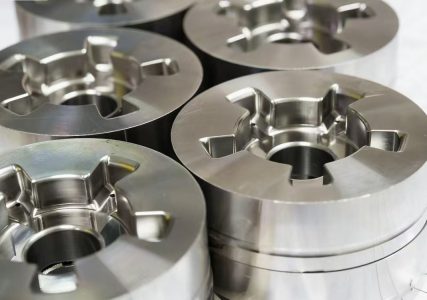
Precision Metal Processing refers to a group of advanced manufacturing techniques that shape, cut, finish, and assemble metal components with extremely tight dimensional control, high surface quality, and consistent repeatability. Unlike conventional metalworking, which focuses on basic shaping, this modern approach achieves micron-level accuracy, making it essential for industries where even small errors can cause failure or safety risks.
In 2025, this practice combines high-precision machinery, digital control, premium tooling, and strict quality management. It has evolved into a smart manufacturing system supported by AI, automation, and real-time monitoring, becoming a foundation of modern industrial production.
Key characteristics:
Dimensional tolerances from ±0.001 mm to ±0.005 mm
Ultra-smooth surface finishes down to Ra ≤ 0.2 μm
High consistency in mass production
Ability to process hard alloys and special metals
Full digital control and traceability
Compatibility with automated inspection and production lines
This advanced method is more than a single process; it is a complete workflow covering design, machining, inspection, and quality assurance that directly determines product performance and durability.
H2: Key Technologies & Processes in Precision Metal Processing
H3: CNC Machining: The Foundation of Precision Metal Processing
CNC machining remains the most important technology in Precision Metal Processing. Modern 5-axis machines enable complex multi-surface machining in one setup, improving accuracy and efficiency. These systems use adaptive control to adjust parameters automatically, ensuring stable performance even during long production runs.
This technology is widely used for precision parts, mold inserts, and complex components in automotive, medical, and electronic products. For industry standards and technical developments, you can refer to the Society of Manufacturing Engineers (SME):
Grinding and polishing are essential for achieving ultra-high accuracy and smooth surfaces. Using super-abrasive tools such as CBN and diamond, these processes remove tiny amounts of material to reach sub-micron precision.
Finishing methods like honing, lapping, and electropolishing improve surface quality for medical devices, food-grade parts, and fluid systems. These steps ensure components meet strict performance requirements.
H3: Laser Processing & Non-Contact Techniques
Laser cutting, welding, and engraving serve as non-contact methods that reduce stress and deformation. They create clean edges with a small heat-affected zone, making them ideal for thin sheets, micro parts, and reflective materials.
This technology adds flexibility for prototyping and small-batch production, widely used in sensors, electronics, and medical components.
H3: EDM Technology
Wire EDM and sinker EDM allow machining of hardened steel, carbide, and high-temperature alloys without physical force. They are ideal for tiny holes, deep slots, and complex internal shapes that traditional tools cannot reach.
EDM plays a key role in mold manufacturing and micro parts, supporting advances in miniaturized products.
H3: Precision Forming & Stamping
Fine blanking, precision stamping, and cold forging improve material utilization and production efficiency. These processes produce consistent parts with enhanced mechanical strength, suitable for high-volume automotive and home appliance components.
H2: Materials Used in Precision Metal Processing
A wide range of metals and alloys are used in Precision Metal Processing, with selection based on strength, corrosion resistance, and application requirements.
Common materials:
Aluminum alloys: lightweight, thermal conductivity for electronics and automotive
Stainless steel 304/316L: biocompatible for medical and marine use
Titanium alloys: high strength-to-weight for aerospace and implants
Copper & brass: conductivity for connectors and heat exchangers
Tool steel: for molds and wear-resistant parts
High-temperature alloys (Inconel, Hastelloy): for extreme environments
Material standards are defined by ASTM International, a global authority:
H2: Why Precision Metal Processing Matters in 2025
H3: Miniaturization & High Performance
Market trends toward smaller, smarter, and more efficient devices increase demand for components made with Precision Metal Processing. Medical devices, wearables, EV parts, and aerospace systems all rely on ultra-precise parts.
H3: Safety & Reliability
In automotive, medical, and aerospace, component reliability directly affects safety. Tight tolerances and stable quality reduce failure risks and ensure long-term performance.
H3: Digital & Smart Manufacturing
By 2025, digital twins, MES systems, and automation have transformed production. Data-driven control improves traceability, reduces errors, and speeds up delivery.
H3: Global Competitive Advantage
High-precision components increase product value. They lower assembly costs, reduce defects, and help companies compete in global markets.
H2: Main Applications in 2025
H3: Automotive Industry
Electric and intelligent vehicles depend on precision parts such as motor components, battery connectors, transmission parts, and sensor housings.
H3: Medical Devices
Surgical tools, implants, diagnostic equipment, and lab devices require biocompatibility and extremely accurate dimensions.
H3: Consumer Electronics
Smartphones, tablets, and home appliances use micro-connectors, heat sinks, frames, and gears produced with advanced machining methods.
H3: Aerospace
Aerospace parts require high precision, heat resistance, and lightweight performance, including engine components, avionics parts, and structural elements.
H3: Industrial Automation
Robots and automation systems use precision guide rails, gearboxes, actuators, and motion components for stability and accuracy.
H2: Quality Control Systems
A complete quality system ensures stable output:
High-precision CNC machines and CMM measurement tools
Incoming material inspection and certification
Standard operating procedures for every process
Environment control for temperature, humidity, and vibration
Regular machine calibration
Statistical Process Control (SPC)
Full material and batch traceability
Quality management best practices are provided by American Society for Quality (ASQ):
AI optimization for tool paths and error compensation
Green manufacturing with less energy and waste
In-line 100% automatic inspection
Hybrid manufacturing combining 3D printing and machining
Digital twin simulation before production
Micro and nano-scale processing for medical and electronics
H2: Why Choose Huazhi Mould for Your Precision Metal Processing
Huazhi Mould is a professional manufacturer specializing in the design and production of small to large injection molds, with strong capabilities in advanced metal component production. We serve automotive, home appliance, medical device, and electronics industries with modern equipment and a skilled technical team.
Our advantages:
Advanced machines supporting high-quality production
Rich experience in automotive, home appliance, and medical fields
Strict quality control and full inspection
Custom solutions from design to mass production
Stable delivery and professional after-sales support
Competitive pricing and efficient project management
We deliver reliable, cost-effective solutions that meet international standards. Learn more:
H3: Q1: What is the difference between Precision Metal Processing and traditional metalworking?
Precision Metal Processing achieves micron-level accuracy, better surfaces, and higher consistency. Traditional methods have looser tolerances and are used for basic parts.
H3: Q2: Which industries need it most?
Automotive, medical, aerospace, electronics, home appliances, and automation have the highest demand.
H3: Q3: What accuracy can be achieved?
Up to ±0.001 mm for critical parts; standard ranges from ±0.005 mm to ±0.01 mm.
Unit cost may be higher, but total cost is lower due to less waste and fewer failures.
H3: Q6: Can it process complex parts?
Yes, 5-axis CNC, EDM, and laser handle deep cavities, micro holes, and complex shapes.
H3: Q7: How long does production take?
Simple parts in days; complex molds or parts in several weeks.
H2: Conclusion
Precision Metal Processing is a cornerstone of modern advanced manufacturing, supporting high-performance, miniaturized, and reliable products across key industries in 2025. With continuous integration of AI, digitalization, and green production, it will keep driving industrial innovation and global competitiveness.
Choosing an experienced, well-equipped partner ensures quality, delivery, and cost efficiency.
Call to Action
If you need reliable solutions supported by Precision Metal Processing or professional injection molds for automotive, home appliance, medical, or electronic projects, contact Huazhi Mould today. Get custom solutions with advanced technology, strict quality control, and on-time delivery. Visit: