
Precision Metal 6 in 2026: A Complete Guide to Advanced Manufacturing Excellence Introduction: The Evolution of Precision in Metal Processing
ntroduction: The Evolution of Precision in Modern Manufacturing
In the dynamic landscape of industrial production, the demand for components with exceptional accuracy, durability, and complexity has never been higher. As we navigate through 2026, a new standard has emerged as a cornerstone for industries ranging from automotive to medical devices: Precision Metal 6. This isn’t just a specification; it’s a paradigm shift in how we conceive, design, and fabricate the critical metal parts that power modern innovation. For a company like HuaZhi Mould—a leader in designing and manufacturing injection molds from small to large scale for automotive, home appliances, and medical equipment—understanding and mastering this standard is integral to delivering superior value to our global partners. This complete guide will delve into what Precision Metal 6 signifies, its processing techniques, and why it represents the future of high-tolerance manufacturing.
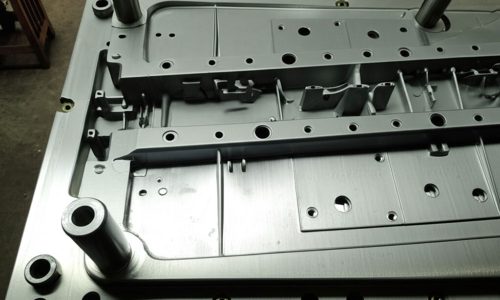
Chapter 1: Defining Precision Metal 6 – The 2026 Benchmark
What Exactly is the Precision Metal 6 Standard?
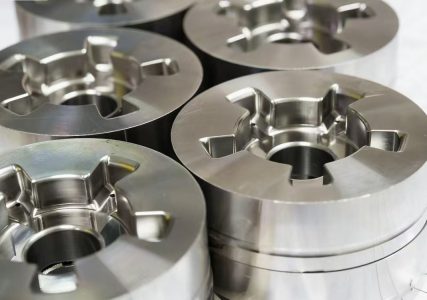
Precision Metal 6 refers to a stringent tier of dimensional and geometric tolerances, surface finish quality, and material integrity in metal components. The “6” often correlates to an ISO standard tolerance grade, indicating a very high level of precision suitable for assemblies where fit, function, and longevity are non-negotiable. In 2026, this standard encompasses not just the final product’s measurements but the entire production journey—from advanced digital design and simulation to cutting-edge fabrication and rigorous metrology.
The Pillars of Modern Production for Precision Metal 6
Achieving Precision Metal 6 compliance relies on several interconnected pillars of modern manufacturing:
- Digital Twin & Advanced CAD/CAM: Every component begins its life in a sophisticated digital environment. Modern production now uses AI-driven design software to simulate stress, thermal dynamics, and flow long before physical machining begins, virtually eliminating costly trial-and-error. Leading platforms like Autodesk Fusion 360 (DoFollow external link) offer integrated tools that streamline this process, ensuring designs are optimized for Precision Metal 6 from the start.
- Next-Generation Machining: Technologies like 5-axis CNC machining, micro-machining, and Swiss-type turning allow for the creation of incredibly complex geometries with tolerances often within microns. The integration of real-time monitoring and adaptive control ensures consistent Precision Metal 6 output across production runs. HuaZhi Mould’s state-of-the-art facilities, detailed on our official portal (internal link), are equipped with these advanced systems to meet the most demanding specifications.
- Additive Manufacturing (Metal 3D Printing): For prototypes or components with internal lattice structures impossible to mill, metal additive manufacturing is becoming a complementary production tool. It allows for lightweight, strong parts that meet the stringent demands of aerospace and medical implants. Industry leaders like EOS (DoFollow external link) continue to push the boundaries of what’s possible with metal 3D printing for Precision Metal 6 applications.
- Intelligent Metrology & Quality Assurance: Vision systems, high-precision CMMs (Coordinate Measuring Machines), and laser scanners provide exhaustive 3D data. This isn’t just about pass/fail checks; it’s about collecting data to feed back into the digital twin, creating a closed-loop, self-optimizing production ecosystem.
Alt text: Precision Metal 6 machining process showcasing advanced CNC technology for high-tolerance production
Chapter 2: The Production Workflow for Precision Metal 6 Components
Stage 1: Design for Excellence (DfX)
The journey to a Precision Metal 6 component starts with collaborative design. Engineers work with clients to optimize part design for manufacturability (DFM), assembly (DFA), and cost (DFC). Using tools like SOLIDWORKS (DoFollow external link) and our proprietary simulation libraries, we ensure the design is robust before any metal is cut. Our team at HuaZhi Mould, accessible via our internal portal (internal link), specializes in translating complex designs into feasible Precision Metal 6 components.
Stage 2: Material Science & Selection for Precision Metal 6
The base material is critical. Whether it’s stainless steel for medical devices, aluminum for automotive lightweighting, or specialized alloys for high-temperature applications, selecting the right material with known machinability and stability is a core part of modern production. Our expertise spans a wide range of metals to suit your specific Precision Metal 6 application. For guidance on material selection, refer to resources from the ASM International (DoFollow external link), a leading authority in materials science.
Stage 3: High-Fidelity Machining & Fabrication
This is where precision is physically imparted. Our workshops are equipped with state-of-the-art CNC centers capable of ultra-high-speed machining and delicate micromachining. Processes like hard milling, precision grinding, and EDM (Electrical Discharge Machining) are employed to achieve the required surface finishes and tolerances defined by the Precision Metal 6 standard. Every step is governed by detailed process control plans, as outlined in our quality management system (internal link).
Stage 4: Finishing, Treatment, and Validation
After machining, components often undergo secondary processes:
- Surface Treatments: Anodizing, passivation, plating, or specialized coatings to enhance corrosion resistance, hardness, or aesthetic appeal.
- Heat Treatment: Processes like annealing, quenching, and tempering to achieve desired material properties like strength and ductility.
- Comprehensive Validation: Every batch undergoes multi-stage inspection using CMMs, optical comparators, and surface profilometers. A detailed First Article Inspection Report (FAIR) and full dimensional report are generated, providing transparent proof of Precision Metal 6 compliance. Learn more about our validation protocols on our official site (internal link).
Chapter 3: Industry Applications of Precision Metal 6 Components
Automotive & Electric Vehicles (EVs): Driving Innovation
The shift to EVs and autonomous driving demands lighter, stronger, and more reliable components. Precision Metal 6 parts are essential in:
- Powertrain components (e.g., motor housings, battery cooling plates)
- Sensor mounts and housings requiring absolute dimensional stability
- Advanced driver-assistance systems (ADAS) modules
HuaZhi Mould has partnered with leading automotive manufacturers to deliver Precision Metal 6 components that meet the industry’s strict safety and performance standards. Explore our automotive solutions on our internal portal (internal link).
Medical & Life Sciences: Ensuring Patient Safety
In this field, precision is synonymous with safety. Modern production at this level is used for:
- Surgical instruments and implants (e.g., orthopedic plates, dental components)
- Diagnostics equipment housings and internal mechanisms
- Drug delivery device components
Regulatory bodies like the FDA (DoFollow external link) set strict guidelines for medical device components, making Precision Metal 6 compliance non-negotiable. Our team at HuaZhi Mould is well-versed in these regulations, ensuring every component meets the highest standards.
Consumer Electronics & Telecommunications: Enabling Miniaturization
The miniaturization trend continues. Precision Metal 6 enables:
- Smartphone internal frames (chassis) and camera modules
- Connector housings for high-speed data transmission
- Heat sinks for managing thermal loads in compact devices
As consumer electronics become smaller and more powerful, the need for advanced production expertise grows. HuaZhi Mould’s experience in this sector, detailed on our official site (internal link), ensures we can deliver components that meet the industry’s demanding specifications.
Why Choose HuaZhi Mould for Your Precision Metal 6 Projects?
At HuaZhi Mould, Precision Metal 6 isn’t just a service we offer; it’s embedded in our culture. Our partnership ensures you benefit from:
- End-to-End Expertise: From conceptual design and production to final validation and assembly, we provide a seamless, integrated service. Learn more about our Injection Molding capabilities (internal link).
- Technology Investment: We continuously invest in the latest machining, metrology, and software technology to stay at the forefront of what’s possible in modern production.
- Proven Quality Systems: Our operations are built on robust, auditable quality management systems, ensuring traceability and consistency for every Precision Metal 6 component, lot after lot.
- Collaborative Partnership: We view ourselves as an extension of your engineering team. We proactively suggest design optimizations and process improvements to enhance performance, reduce cost, and accelerate your time-to-market.
Conclusion: Precision as Your Competitive Edge in 2026
As technological boundaries are pushed further, the margin for error shrinks. Embracing the Precision Metal 6 standard through expert production is no longer a luxury but a strategic necessity for innovation and market leadership. It ensures your products are reliable, efficient, and capable of meeting the most demanding operational environments.
Ready to turn your most challenging design concepts into precision-engineered reality? Contact HuaZhi Mould’s expert team today (internal link) for a confidential consultation. Let’s discuss how our mastery of Precision Metal 6 can power your next breakthrough.
FAQ (Frequently Asked Questions)
Q1: What industries most commonly require Precision Metal 6 tolerances?A: The automotive (especially EV and performance sectors), aerospace, medical device, semiconductor, and high-end consumer electronics industries are the primary drivers for Precision Metal 6 components due to their extreme requirements for safety, performance, and miniaturization.
Q2: How does production differ for prototyping vs. mass production?A: While the core commitment to accuracy remains, the approach differs. Prototyping may utilize faster-turn methods like high-speed 3+2 axis machining or metal 3D printing for validation. Mass production for Precision Metal 6 focuses on optimizing the process for stability, cycle time, and cost-efficiency across thousands of parts, often using dedicated fixtures and automated workflows.
Q3: Can you work with the specific alloy or material grade we require?A: Absolutely. Our production expertise covers a vast portfolio of materials, including stainless steels (304, 316, 17-4PH), aluminum (6061, 7075), titanium, copper alloys, and various tool steels. We can source certified materials and tailor our machining strategies to your specified alloy’s properties.
Q4: What documentation do you provide to certify Precision Metal 6 compliance?A: We provide comprehensive documentation, including Material Certifications (Mill Certs), Full Dimensional Inspection Reports (with CMM data), First Article Inspection Reports (FAIR), and Certificates of Conformance (CoC). All documentation is tailored to meet industry-specific standards like ISO 9001, IATF 16949, or AS9100.
Q5: How do you handle design changes or iterations during a Precision Metal 6 project?A: We maintain an agile and collaborative approach. Design changes are managed through a formal Engineering Change Order (ECO) process. Our engineers will assess the impact on manufacturability, cost, and timeline, providing you with clear options and recommendations before proceeding, ensuring the final component still meets all Precision Metal 6 requirements.