Precision Metal Processing: What It Is, How It Works & Why It Matters
Modern manufacturing development is closely tied to the continuous upgrading of metal fabrication technologies, and high-accuracy manufacturing methods have become the core standard for judging industrial product quality in 2025. Precision metal processing refers to a professional metal fabrication technology that strictly controls component dimensional tolerances, surface finish and structural consistency through professional equipment and standardized processes. Different from traditional rough metal processing that only meets basic molding needs, this advanced manufacturing method focuses on micron-level production accuracy, stable batch consistency and high-standard surface treatment, which can fully meet the strict production requirements of high-end industrial fields.
In the current intelligent manufacturing era, ordinary metal processing can no longer adapt to the iterative upgrading of automotive parts, medical devices and smart home appliances. Many high-precision core components require ultra-tight tolerance control and flawless surface effects, which is exactly where the advantages of precision metal processing lie. As a professional injection mold manufacturing enterprise focusing on small to large-scale mold customization, Huazhi Mold adopts mature high-precision manufacturing technology in all mold core production links. We integrate advanced production equipment and standardized process systems to complete component production, and you can check our full technical capabilities and project cases through the official link: https://www.huazhimould.com/wp-admin.
Precision Metal Processing
2. Core Features of Advanced Precision Metal Processing Technology in 2025
2.1 Ultra-Tight Dimensional Tolerance Control
The most prominent feature of modern precision metal processing is its ultra-high dimensional accuracy control capability. Traditional metal fabrication usually allows tolerance errors between ±0.2mm and ±0.5mm, which is sufficient for ordinary mechanical parts with low matching requirements. However, high-end industrial components such as mold inserts, medical equipment accessories and automotive precision connectors require error control within ±0.01mm, and some aerospace-grade parts even need sub-micron accuracy. This strict error standard is realized through professional precision processing technology, which effectively avoids product failure, equipment jamming and shortened service life caused by dimensional deviation.
In 2025, with the popularization of intelligent processing equipment, the tolerance stability of this manufacturing technology has been further improved. Through real-time data monitoring and automatic error correction systems, the accuracy deviation of mass-produced products is controlled within an extremely small range, ensuring that every product delivered to customers meets the design drawing standards.
2.2 High-Quality Surface Finishing Effect
Surface finish is one of the key indicators affecting the service performance and appearance quality of metal parts, and it is also an important advantage of precision metal processing. Ordinary metal cutting and stamping processes are prone to burrs, scratches and uneven surfaces, which require secondary manual polishing and greatly reduce production efficiency. The advanced processing technology used in high-precision metal fabrication can directly complete mirror-level surface finishing in one molding process, with the surface roughness controlled below Ra 0.2μm.
This high-quality surface effect is particularly important for injection mold production. The smooth mold cavity can effectively improve the surface finish of plastic products, eliminate post-processing procedures such as spraying and polishing, reduce production costs for enterprises, and improve the overall yield of products. For medical devices and precision electronic components, smooth surfaces can avoid friction loss and bacterial residue, improving product safety and durability.
https://www.huazhimould.com/wp-admin
2.3 Stable Batch Production Consistency
For industrial manufacturing enterprises, the biggest pain point of traditional metal processing is inconsistent product quality in batch production. Manual operation errors and outdated equipment lead to large differences in the size and quality of different batches of parts, which seriously affects the assembly efficiency and product uniformity of downstream manufacturers. Precision metal processing relies on fully automated digital control systems to realize standardized production of all links from raw material cutting, forming, finishing to inspection.
All production parameters are set through digital programs, eliminating manual operation errors. Whether it is small-batch prototype customization or large-scale mass production of tens of thousands of parts, it can maintain highly consistent product quality. This stable production capability has become an indispensable technical support for modern large-scale industrial manufacturing, especially for the standardized production of automobile and home appliance supporting parts.
2.4 Wide Adaptability of Processing Materials
With the continuous enrichment of industrial metal materials, more and more high-strength, high-hardness and special functional alloys are applied to product manufacturing, and ordinary processing equipment cannot complete the forming and finishing of these difficult-to-process materials. Modern precision metal processing technology is compatible with dozens of metal materials including tool steel, stainless steel, aluminum alloy, titanium alloy, copper and high-hardness alloy.
According to the actual use scenario, strength requirements and cost budget of customer products, we can select matching materials and processing technologies to ensure that the finished parts have excellent structural stability, corrosion resistance and wear resistance. For example, medical equipment parts use biocompatible titanium alloy processing, automotive lightweight parts use high-strength aluminum alloy processing, and injection mold cores use high-hardness tool steel processing to extend mold service life.
3. Mainstream Technical Methods of Precision Metal Processing in Modern Manufacturing
3.1 Multi-Axis CNC Intelligent Machining
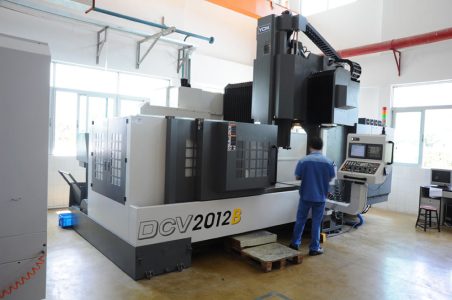
CNC machining is the most widely used core technology in high-precision metal manufacturing at this stage. Different from traditional single-axis machining equipment, modern multi-axis CNC machining centers can realize multi-angle and multi-dimensional integrated processing of complex structural parts in one clamping. This technology effectively avoids position errors caused by repeated clamping and improves the overall processing accuracy of parts.
Huazhi Mold introduces advanced 5-axis CNC machining equipment, which is specially used for the production and customization of complex injection mold structures and precision metal parts. The equipment supports customized processing of various complex curved surfaces, special-shaped structures and deep cavity parts, and can meet the personalized precision production needs of different industries. The digital program control mode ensures that each processing link is accurate and standardized, laying a solid foundation for high-quality finished products.
3.2 Ultra-Precision Grinding and Polishing Technology
For high-hardness metal materials and parts with ultra-high surface finish requirements, precision grinding and ultra-fine polishing technologies are essential processing links. This technology uses high-precision abrasive tools and constant-temperature processing environments to perform fine grinding on the surface of metal parts, remove tiny tool marks and surface defects, and achieve nano-level surface smoothness.
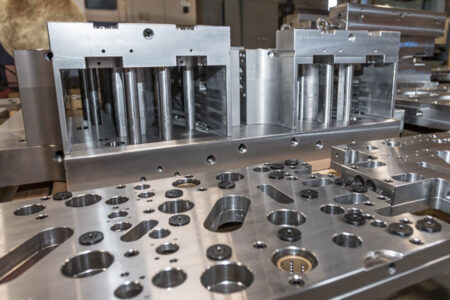
In the field of injection mold manufacturing, mold cavities and core inserts need to undergo multiple precision grinding and polishing treatments to ensure that the molded plastic products have no surface defects such as water lines and scratches. This processing technology greatly improves the appearance grade of terminal products and is widely used in the production of high-end home appliance shells and automotive interior parts.
Precision Metal Processing
3.3 EDM and Laser Precision Processing Technology
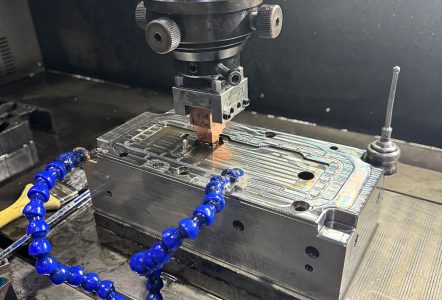
For some tiny holes, narrow grooves and complex special-shaped structures that are difficult to process by traditional cutting methods, EDM electric spark processing and laser processing technologies are adopted. EDM processing uses electric spark discharge to corrode metal materials, which is not affected by material hardness, and can complete precision processing of various high-hardness alloy parts.
Laser processing has the advantages of high speed, high precision and no contact damage, and is suitable for micro-cutting, engraving and fine forming of precision parts. The combination of these two technologies makes up for the shortcomings of traditional processing methods, expands the processing range of precision parts, and can meet the ultra-fine processing needs of medical devices and electronic micro-components.
3.4 Precision Stamping and Forming Technology
For thin-walled metal parts and standardized sheet metal components used in large quantities, precision stamping forming technology is the most efficient processing method. Through customized high-precision stamping dies and automatic stamping equipment, mass rapid production of sheet metal parts can be realized. Combined with subsequent fine trimming and shaping processes, the dimensional accuracy and flatness of stamping parts are fully guaranteed.
This technology is widely used in the production of home appliance motor accessories, automotive connector sheet metal parts and electronic equipment shell parts. It balances production efficiency and product accuracy, and is the preferred process for large-scale standardized precision metal parts production.
4. Key Industrial Application Scenarios of Precision Metal Processing (2025)
4.5 Automotive Manufacturing Industry
The automotive industry is one of the largest application markets for high-precision metal manufacturing technology. With the rapid development of new energy vehicles, the precision requirements of automotive parts are constantly improving. From traditional engine parts, transmission components and chassis structural parts to new energy vehicle battery shells, motor accessories and electronic control system parts, all need high-precision metal processing support.
High-accuracy parts matching can effectively reduce vehicle operation friction, improve energy utilization efficiency, and enhance driving stability and safety. Huazhi Mold provides supporting mold and precision part processing services for many automotive supporting manufacturers, relying on mature manufacturing technology to produce high-standard automotive mold components, helping downstream enterprises improve product quality and market competitiveness.
4.2 Medical Device Manufacturing Industry
The medical device industry has the most stringent standards for product precision and safety, and all core metal parts must be produced through high-standard precision manufacturing processes. Surgical instruments, orthopedic implants, endoscopic accessories and diagnostic equipment parts are all typical application products.
Tiny dimensional errors may affect the use effect of medical devices and even endanger patient safety. Therefore, all processing links of medical-grade metal parts need to comply with ISO medical industry standards, with strict control over tolerance accuracy, surface smoothness and material safety. The fine processing technology can realize the production of miniaturized and refined medical parts, meeting the development trend of minimally invasive and intelligent medical devices in 2025.
4.3 Home Appliance Manufacturing Industry
Smart home appliances are developing towards high precision, low noise and long service life, which puts forward higher requirements for internal metal components and injection molds. Precision processing technology is used in the production of home appliance compressor parts, motor shafts, gear components and mold core parts.
High-precision matching parts can reduce equipment operation noise, reduce energy consumption, and avoid product failure caused by part wear and loose assembly. The high-precision injection molds produced by Huazhi Mold can help home appliance enterprises produce flawless plastic shell parts and internal structural parts, improve product appearance and service life, and help brands occupy the high-end home appliance market.
4.4 Electronics and Aerospace Industry
Aerospace equipment requires parts to have the characteristics of high strength, light weight and high stability, and ultra-precision metal manufacturing technology provides reliable technical support for the production of turbine blades, hydraulic system parts and structural fasteners. In the electronic industry, with the miniaturization of 5G communication equipment and intelligent electronic products, micro-precision metal parts are widely used in equipment heat dissipation structures, connectors and chip packaging components.
The continuous innovation of processing technology promotes the iterative upgrading of high-end electronic and aerospace products, and becomes an important foundation for the development of high-end manufacturing industry.
5. Why Choose Huazhi Mold for Precision Metal Processing and Mold Manufacturing?
In the fiercely competitive high-precision manufacturing market, choosing a reliable processing and mold customization partner is the key to ensuring product quality and corporate benefits. As a professional enterprise focusing on the design and manufacturing of small to large injection molds, Huazhi Mold has accumulated rich industry experience and mature technical systems, and can provide customers with one-stop high-quality manufacturing solutions. Our core advantages are reflected in the following aspects:
Advanced Technical Equipment: We have introduced a full set of modern intelligent processing equipment, including 5-axis CNC machining centers, ultra-precision grinding machines, laser processing equipment and intelligent precision detection instruments. All production equipment is updated according to the 2025 manufacturing standards, which can meet the high-precision production needs of various industries such as automobiles, medical treatment and home appliances.
Professional Technical Team: The company has a professional team composed of senior mold designers and precision processing technicians. The team has in-depth industry insight and rich practical experience, can accurately understand customer drawing requirements, optimize processing schemes, and avoid product defects caused by unreasonable process design.
Strict Quality Control System: We implement full-process quality inspection from raw material incoming inspection, semi-finished product processing monitoring to finished product delivery inspection. Professional coordinate measuring instruments and laser detection equipment are used to calibrate product accuracy to ensure that all delivered products fully meet customer design standards and industry specifications.
Flexible Customization Service: Whether it is small-batch prototype customization, medium-batch trial production or large-scale mass production, we can provide targeted processing solutions. We support personalized customization of various special-shaped precision parts and non-standard molds, and fully meet the differentiated needs of customers.
Cost-Effective and Timely Delivery: Through standardized process management and intelligent production scheduling, we effectively reduce production costs and shorten the production cycle. On the premise of ensuring high product quality, we provide customers with cost-effective products and stable delivery cycles to help customers seize market opportunities.
6. FAQ About Precision Metal Processing
6.1 What is the gap between precision metal processing and traditional metal processing?
The core gap lies in processing accuracy, surface quality and batch stability. Traditional metal processing has low tolerance accuracy, rough surface and large batch quality difference, which is only suitable for low-demand ordinary parts. Advanced precision manufacturing technology has ultra-high dimensional accuracy, flawless surface finish and stable batch consistency, which can meet the production standards of high-end industrial parts and precision molds.
6.2 What kinds of materials can be used in precision metal processing production?
This processing technology is highly compatible with materials, covering tool steel, stainless steel, aluminum alloy, titanium alloy, copper alloy and various high-hardness special alloys. We will select the most suitable processing materials according to the customer’s product use environment, performance requirements and cost budget to ensure the best use effect of the finished product.
6.3 What is the production cycle of precision metal processing parts and molds?
The production cycle is mainly determined by product complexity, processing accuracy requirements and order quantity. Simple standard precision parts can be completed within 1-2 weeks; complex special-shaped parts and customized precision injection molds need 3-6 weeks of processing and debugging cycles. We will formulate a detailed production schedule for each order and feed back the progress in real time to ensure on-time delivery.
6.4 Which industries are suitable for precision metal processing products?
It is widely applicable to high-precision manufacturing fields including automobile new energy, medical devices, smart home appliances, aerospace, electronic communication and precision instrumentation. All products that require high dimensional accuracy, high surface quality and stable batch quality can adopt this processing technology.
6.5 How to ensure the long-term stability of precision mold processing quality?
Huazhi Mold adopts standardized mold manufacturing processes and high-quality mold steel materials, and conducts multiple precision debugging and wear resistance tests on the mold core. At the same time, we provide regular mold maintenance suggestions and after-sales service to avoid mold accuracy attenuation caused by long-term use, ensuring the long-term stable operation of customer production lines.
7. Conclusion
As the core supporting technology of modern high-end manufacturing, precision metal processing plays an irreplaceable role in promoting the iterative upgrading of various industrial products. In 2025, with the continuous development of intelligent manufacturing, the accuracy standard and application scope of high-precision metal manufacturing will be further improved, becoming an important symbol of enterprise manufacturing strength.
From precision injection mold customization to various precision metal component processing, high-standard manufacturing technology can effectively improve product quality, reduce production failure rates, and enhance the core competitiveness of enterprises. In the context of increasingly strict industrial manufacturing standards, choosing professional precision processing and mold manufacturing partners has become an important part of enterprise development.
Call to Action: If you are looking for reliable precision metal processing and custom injection mold manufacturing services, Huazhi Mold is your ideal choice. We provide one-stop customized solutions from design, processing, debugging to after-sales service. Contact our professional team now to get a free technical consultation and exclusive project quotation, and let high-quality manufacturing help your business grow!