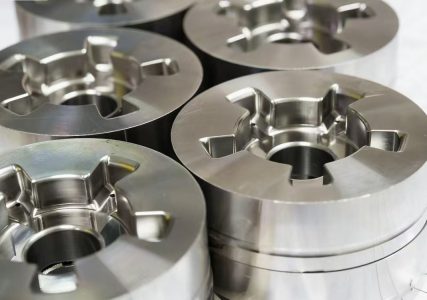
Precision Metal Processing 2026: Complete Guide to High-Tolerance Manufacturing
ntroduction to Precision Metal Processing
In the rapidly evolving world of advanced manufacturing, Precision Metal Processing has become a cornerstone technology for industries demanding the highest levels of accuracy and quality. As we move into 2026, this specialized field continues to push the boundaries of what’s possible in metal fabrication, enabling the creation of components with tolerances measured in microns.
Precision Metal Processing encompasses a range of advanced manufacturing techniques designed to produce metal parts with exceptional accuracy, consistency, and surface finish. From aerospace components to medical devices, this technology is enabling innovations that were once thought impossible.
What is Precision Metal Processing? A Comprehensive Definition
The Core Principles of Precision Metal Processing
Precision Metal Processing refers to the specialized manufacturing processes used to create metal components with extreme
https://www.huazhimould.com
ly tight tolerances, typically within ±0.001 inches or better. Unlike conventional metalworking, which focuses primarily on shaping raw materials, precision processing emphasizes accuracy, repeatability, and quality control at every stage of production.
The key characteristics that define Precision Metal Processing include:
●
Micro-level accuracy: Ability to maintain tolerances within microns
●
Advanced metrology: Use of sophisticated measurement equipment
●
Controlled environments: Temperature and humidity-controlled facilities
●
Specialized tooling: Custom-designed cutting tools and fixtures
Historical Evolution of Precision Metal Processing
The journey of Precision Metal Processing began during the Industrial Revolution but has undergone dramatic transformations in recent decades. From the early days of manual machining to today’s computer-controlled systems, the evolution has been driven by the need for greater accuracy and efficiency.
Key milestones in the development of Precision Metal Processing:
1800s – Manual Machining Era
●
Skilled craftsmen used hand tools and basic machines
●
Limited consistency and accuracy
●
High dependence on individual skill
1950s – Introduction of CNC Technology
●
Computer Numerical Control revolutionized manufacturing
●
Improved consistency and repeatability
●
Foundation for modern precision processing
2000s – Digital Integration
●
CAD/CAM software integration
●
Multi-axis machining capabilities
●
Enhanced precision and complexity handling
2020s – Smart Manufacturing
●
IoT-enabled machines
●
AI-driven process optimization
●
Real-time quality monitoring
Advanced Techniques in Precision Metal Processing
CNC Machining: The Workhorse of Precision Processing
Computer Numerical Control (CNC) machining remains the most widely used technique in Precision Metal Processing. Modern CNC machines offer multi-axis capabilities, allowing for complex geometries to be machined in a single setup.
Key advantages of CNC machining in precision processing:
●
High repeatability: Consistent quality across large production runs
●
Complex geometries: Ability to machine intricate shapes
●
Material versatility: Works with a wide range of metals
●
Automation: Minimal human intervention required
Swiss-Type Machining for Micro Components
Swiss-type machining is a specialized form of CNC machining designed for extremely small and precise components. This technique is particularly valuable in the medical and electronics industries.
Unique features of Swiss-type machining:
●
Guide bushing support: Provides exceptional stability for small diameters
●
High-speed operation: Enables efficient production of micro parts
●
Minimal vibration: Ensures superior surface finish
●
Tight tolerance control: Capable of micron-level accuracy
Electrical Discharge Machining (EDM)
EDM is a non-traditional machining process that uses electrical discharges to remove material. This technique is essential for Precision Metal Processing applications involving hard or complex materials.
Types of EDM used in precision processing:
●
Wire EDM: Uses a thin wire electrode to cut intricate shapes
●
Sinker EDM: Employs a shaped electrode to create cavities
●
Hole Drilling EDM: Specialized for creating precise holes
Laser Machining and Micromachining
Laser-based precision processing techniques have revolutionized the industry by offering non-contact machining with exceptional accuracy.
Benefits of laser precision processing:
●
Non-contact process: Eliminates mechanical stress on components
●
Ultra-fine features: Capable of machining features smaller than a human hair
●
High aspect ratios: Can create deep, narrow features
●
Minimal heat-affected zone: Preserves material properties
Material Science in Precision Metal Processing
Material Selection Criteria
The choice of material is critical in Precision Metal Processing and depends on several factors:
CP Titanium: High corrosion resistance, biocompatible
Exotic Alloys
●
Inconel: High temperature and corrosion resistance
●
Hastelloy: Exceptional corrosion resistance
●
Tungsten Alloys: High density, radiation shielding
Quality Control in Precision Metal Processing
Metrology Equipment and Techniques
Maintaining the required precision levels demands sophisticated measurement equipment:
Coordinate Measuring Machines (CMM)
●
Laser CMM: Non-contact measurement
●
Touch-probe CMM: High accuracy contact measurement
●
Vision systems: For micro-features inspection
Optical Measurement Systems
●
White light interferometry
●
Confocal microscopy
●
Digital holography
Surface Finish Analysis
●
Profilometers
●
Atomic Force Microscopy (AFM)
●
Scanning Electron Microscopy (SEM)
Statistical Process Control (SPC)
SPC is a fundamental quality control methodology in Precision Metal Processing:
●
Control charts: Monitor process stability
●
Capability analysis: Assess process capability (Cp, Cpk)
●
Root cause analysis: Identify and eliminate variation sources
●
Continuous improvement: Ongoing process optimization
Industry Applications of Precision Metal Processing
Aerospace and Defense
The aerospace industry is one of the largest consumers of precision machined components, requiring parts that can withstand extreme conditions while maintaining perfect functionality.
Key applications:
●
Turbine blades and vanes
●
Fuel system components
●
Landing gear parts
●
Avionics housings
●
Missile guidance systems
Critical requirements:
●
Dimensional accuracy within ±0.0005 inches
●
Surface finish Ra < 0.4 µm
●
Material integrity and consistency
●
Strict adherence to industry standards
Medical and Healthcare
Precision is literally a matter of life and death in medical device manufacturing. Precision Metal Processing enables the creation of life-saving devices with unparalleled accuracy.
The miniaturization trend in electronics has pushed Precision Metal Processing to new limits.
Key applications:
●
Semiconductor manufacturing equipment
●
Connector housings and contacts
●
Heat sinks and thermal management
●
RF shielding components
●
Micro-electromechanical systems (MEMS)
Technical challenges:
●
Sub-micron tolerances
●
Ultra-fine surface finishes
●
High conductivity requirements
●
EMI/RFI shielding effectiveness
Future Trends in Precision Metal Processing
Industry 4.0 Integration
The fourth industrial revolution is transforming Precision Metal Processing through:
Smart factories
●
IoT-enabled machine monitoring
●
Predictive maintenance systems
●
Real-time process optimization
●
Digital twin technology
Artificial Intelligence
●
AI-driven quality control
●
Machine learning for process optimization
●
Computer vision for defect detection
●
Natural language processing for documentation
Additive Manufacturing Synergy
The combination of additive and subtractive manufacturing is creating new possibilities:
Hybrid manufacturing systems
●
3D printing followed by precision machining
●
In-process inspection and correction
●
Multi-material component fabrication
Nano-Precision Processing
As technology advances, the demand for nano-scale precision is growing:
Emerging techniques:
●
Atomic layer machining
●
Nano-imprint lithography
●
Focused ion beam milling
●
Scanning probe microscopy machining
Why Choose HuaZhi Mold for Your Precision Metal Processing Needs?
HuaZhi Mold has established itself as a leader in the precision manufacturing industry, offering comprehensive solutions that combine technical expertise with cutting-edge technology.
Q1: What is the typical tolerance range in Precision Metal Processing?
A: The standard tolerance range in Precision Metal Processing typically falls between ±0.001 inches to ±0.0001 inches (±0.0025mm to ±0.0025µm), depending on the specific process and material. Advanced techniques like nano-machining can achieve tolerances in the nanometer range.
Q2: How does Precision Metal Processing differ from conventional machining?
A: While conventional machining focuses on basic shaping and sizing, Precision Metal Processing emphasizes:
●
Accuracy: Tolerances measured in microns rather than millimeters
●
Consistency: High repeatability across production runs
●
Surface finish: Superior surface quality requirements
●
Quality control: Multi-stage inspection processes
●
Material science: Deep understanding of material propertieshttps://www.huazhimould.com
Q3: What materials are most challenging for Precision Metal Processing?
A: The most challenging materials include:
●
Hardened steels (above 60 HRC)
●
Titanium alloys (due to low thermal conductivity)
●
Nickel-based superalloys (Inconel, Hastelloy)
●
Exotic ceramics (for hybrid processes)
●
Soft, gummy materials (like pure aluminum or copper)
These materials require specialized tooling, cutting parameters, and cooling techniques to achieve precision results.
Q4: What industries benefit most from Precision Metal Processing?
A: The primary beneficiaries are:
●
Aerospace and defense: For engine components and structural parts
●
Medical devices: For implants and surgical instruments
●
Automotive: For fuel systems and sensors
●
Electronics: For connectors and shielding
●
Semiconductor: For manufacturing equipment
Q5: How is quality ensured in Precision Metal Processing?
A: Quality assurance involves multiple layers:
Process control
●
Statistical Process Control (SPC)
●
Real-time monitoring systems
●
Process capability analysis
Inspection methods
●
Coordinate Measuring Machines (CMM)
●
Optical comparators
●
Surface roughness testers
●
Material testing equipment
Certifications
●
ISO 9001 quality management
●
Industry-specific certifications (AS9100, ISO 13485)
●
Regular third-party audits
Conclusion: The Future of Precision Metal Processing
As we look ahead to 2026 and beyond, Precision Metal Processing is poised for continued growth and innovation. The convergence of advanced materials, digital technologies, and manufacturing expertise is opening new frontiers in what’s possible.
The industry will continue to be driven by:
1. Technological Advancements
●
AI and machine learning integration
●
Quantum computing for process optimization
●
Advanced materials development
●
Nano-precision capabilities
2. Industry Demands
●
Increasing miniaturization requirements
●
Higher performance expectations
●
Sustainability and efficiency focus
●
Customization and personalization
3. Global Competition
●
Rising capabilities in emerging markets
●
Need for continuous innovation
●
Focus on value-added services
●
Supply chain optimization
For businesses seeking precision manufacturing solutions, the key is to partner with providers who combine technical expertise with a forward-looking approach. HuaZhi Mold stands ready to meet these challenges, offering state-of-the-art Precision Metal Processing services that deliver exceptional quality, reliability, and innovation.
Ready to transform your design into a precision-engineered reality? Contact HuaZhi Mold today to discuss your next project and discover how our advanced manufacturing capabilities can bring your vision to life.