What is Precision Metal Processing? A Complete Guide to 2025
In the rapidly evolving manufacturing landscape of 2025, Precision Metal Processing stands as a cornerstone technology driving innovation across multiple industries. This comprehensive guide explores the intricacies of this advanced manufacturing technique, its applications, and future trends that are shaping the industry.
Precision Metal Processing refers to the specialized techniques used to shape, cut, and form metal components with extremely tight tolerances, often measured in micrometers. This level of accuracy is crucial for producing high-quality parts used in aerospace, medical devices, automotive systems, and advanced electronics.
What is Precision Metal Processing?
Definition and Core Principles
Precision Metal Processing encompasses a range of manufacturing processes designed to produce metal components with exceptional accuracy and consistency. Unlike traditional metalworking methods, precision processing focuses on achieving tolerances as tight as ±0.0001 inches (±2.5 micrometers), ensuring that each component meets exact specifications.
The core principles of this technology include:
●
High Accuracy: Maintaining dimensional consistency within microscopic tolerances
●
Repeatability: Producing identical parts batch after batch
Material Integrity: Preserving the structural properties of the base material
Historical Evolution
The journey of Precision Metal Processing began with the industrial revolution but has seen exponential growth in the past two decades. From manual machining to computer numerical control (CNC) systems, the evolution has been driven by the need for more complex and accurate components.
Key milestones include:
●
1940s: Introduction of numerical control machining
●
1970s: Development of CNC technology
●
1990s: Integration of CAD/CAM software
●
2010s: Adoption of multi-axis machining centers
●
2020s: Implementation of AI and IoT in precision manufacturing
Core Technologies in Precision Metal Processing
CNC Machining
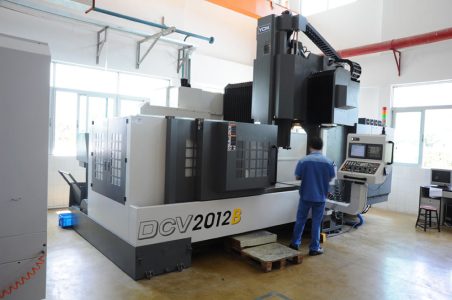
Computer Numerical Control (CNC) machining remains the backbone of modern Precision Metal Processing. These automated systems use pre-programmed software to control the movement of machining tools with unparalleled accuracy.
Key advantages of CNC machining:
●
Ability to produce complex geometries
●
High repeatability and consistency
●
Reduced human error
●
Increased production efficiency
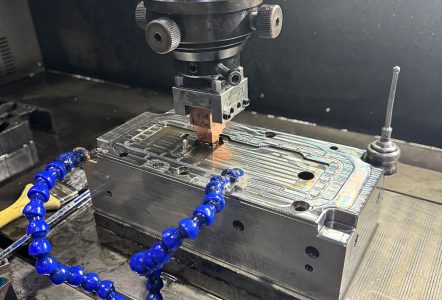
Electrical Discharge Machining (EDM)
EDM, also known as spark machining, is a non-traditional machining process that uses electrical discharges to remove material. This technique is particularly useful for:
●
Machining extremely hard materials
●
Creating complex shapes and fine details
●
Processing materials that are difficult to machine with conventional methods
Laser Cutting and Micromachining
Laser technology has revolutionized Precision Metal Processing by enabling non-contact machining with micron-level accuracy. Modern laser systems can achieve:
●
Cutting widths as narrow as 0.004 inches
●
Hole diameters down to 0.001 inches
●
Surface finishes of Ra 0.4 micrometers or better
Additive Manufacturing Integration
The integration of additive manufacturing (3D printing) with traditional precision machining is creating new possibilities. This hybrid approach allows for:
●
Rapid prototyping of complex parts
●
Production of near-net-shape components
●
Reduced material waste
●
Shorter lead times
Applications Across Industries
Aerospace and Defense
In the aerospace sector, Precision Metal Processing is critical for manufacturing components that must withstand extreme conditions. Applications include:
●
Turbine blades and engine components
●
Landing gear systems
●
Avionics housings
●
Structural fasteners
The tolerances required in aerospace applications often demand precision within ±0.0005 inches, highlighting the importance of advanced processing techniques.
Medical Devices
The medical industry relies heavily on precision metal processing for life-saving equipment and implants:
●
Surgical instruments with mirror-like finishes
●
Implantable devices such as pacemakers and joint replacements
●
Diagnostic equipment components
●
Dental instruments and implants
Materials used in medical applications must meet stringent biocompatibility standards, making precision processing essential for patient safety.
Automotive Manufacturing
Modern vehicles incorporate thousands of precision-machined components:
●
Fuel injection systems
●
Transmission components
●
Engine parts
●
Sensor housings
As vehicles become more technologically advanced, the demand for precision components continues to grow.
Electronics and Semiconductor Industry
The miniaturization trend in electronics has pushed Precision Metal Processing to new limits:
●
Micro connectors and contacts
●
Heat sinks and thermal management components
●
Semiconductor manufacturing equipment
●
Miniature switches and relays
These applications often require features measured in micrometers, pushing the boundaries of current technology.
Materials Used in Precision Metal Processing
Ferrous Metals
Stainless Steel: Known for its corrosion resistance and strength, stainless steel is widely used in medical and food processing equipment.
Tool Steel: Used for manufacturing dies and molds due to its hardness and wear resistance.
Non-Ferrous Metals
Aluminum Alloys: Valued for their lightweight properties and good machinability, aluminum alloys are popular in aerospace and automotive applications.
Titanium Alloys: Offering an excellent strength-to-weight ratio and corrosion resistance, titanium is essential for aerospace and medical implants.
Copper and Copper Alloys: Used for their excellent electrical and thermal conductivity in electronic components.
Exotic Alloys
Inconel and Hastelloy: These nickel-based superalloys are used in high-temperature and corrosive environments such as jet engines and chemical processing equipment.
Tungsten and Molybdenum: Used in applications requiring high melting points and radiation shielding.
Quality Control and Measurement Techniques
Coordinate Measuring Machines (CMM)
CMMs are the gold standard for precision measurement in metal processing. These sophisticated devices use a probe to measure the physical geometrical characteristics of an object with accuracies down to 0.0001 inches.
Optical Measurement Systems
Advanced optical systems provide non-contact measurement capabilities:
●
Laser Scanners: For rapid surface mapping
●
Vision Systems: For dimensional analysis and defect detection
●
Interferometers: For ultra-precise surface flatness measurement
Surface Finish Analysis
Surface roughness is a critical parameter in many precision applications. Modern profilometers can measure surface texture parameters including:
●
Ra (arithmetic average roughness)
●
Rz (average maximum height)
●
Rt (total height)
Future Trends in Precision Metal Processing
Industry 4.0 Integration
The fourth industrial revolution is transforming Precision Metal Processing through:
●
Internet of Things (IoT): Real-time monitoring of machining parameters
●
Artificial Intelligence: Predictive maintenance and process optimization
●
Digital Twins: Virtual replicas for process simulation and optimization
Nanotechnology Applications
As technology advances, precision processing is moving into the nanoscale realm:
●
Nano-imprint lithography
●
Atomic layer deposition
●
Molecular beam epitaxy
These techniques are enabling the production of components with atomic-level precision.
Sustainable Manufacturing
Environmental concerns are driving innovations in sustainable precision processing:
Challenges and Solutions in Precision Metal Processing
Thermal Management
Heat generation during machining can affect dimensional accuracy. Solutions include:
●
Cryogenic cooling systems
●
Advanced coolant delivery methods
●
Thermal compensation algorithms
Vibration Control
Machine vibrations can compromise precision. Mitigation strategies:
●
Active vibration damping systems
●
Improved machine tool design
●
Advanced control algorithms
Tool Wear Monitoring
Maintaining tool sharpness is critical for consistent quality. Modern solutions:
●
Acoustic emission monitoring
●
Force sensing systems
●
Predictive tool life models
Why Choose Huazhi Mould for Precision Metal Processing?
At Huazhi Mould, we combine decades of expertise with state-of-the-art technology to deliver exceptional precision metal processing solutions. Our capabilities include:
Advanced Manufacturing Facilities
●
Modern CNC machining centers with 5-axis capabilities
●
Comprehensive EDM and laser processing equipment
●
Cleanroom facilities for medical-grade components
Quality Assurance
●
ISO 9001:2015 certified quality management system
●
Advanced metrology lab with CMM and optical measurement systems
●
Strict material traceability and documentation
Technical Expertise
●
Experienced engineering team with cross-industry knowledge
●
In-house design and process optimization capabilities
●
Continuous investment in training and technology upgrades
Customer-Centric Approach
●
Flexible production capabilities for prototypes to mass production
●
Transparent communication and project management
●
Competitive pricing with exceptional quality
Whether you need precision components for aerospace, medical devices, or advanced electronics, Huazhi Mould has the expertise and capabilities to meet your requirements. Visit our WordPress admin to learn more about our services.
FAQ: Precision Metal Processing
What industries benefit most from precision metal processing?
Answer: The primary industries include aerospace, medical devices, automotive, electronics, and defense. Each industry has specific requirements, but all benefit from the high accuracy, repeatability, and quality that precision processing provides.
What materials can be processed with precision techniques?
Answer: A wide range of materials can be processed, including stainless steel, aluminum alloys, titanium, copper, exotic alloys like Inconel, and even advanced composites. The choice of material depends on the application requirements for strength, corrosion resistance, weight, and other properties.https://www.huazhimould.com/wp-admin
What tolerances can be achieved with precision metal processing?
Answer: Modern precision processing can achieve tolerances as tight as ±0.0001 inches (±2.5 micrometers). The achievable tolerance depends on the specific process, material, part geometry, and equipment capabilities.
How does precision metal processing differ from traditional machining?
Answer: The key differences are in accuracy, repeatability, and the technologies used. Precision processing employs advanced CNC systems, sophisticated measurement techniques, and specialized processes like EDM and laser machining to achieve micron-level accuracy, whereas traditional machining typically has larger tolerances and less consistency.
What are the cost considerations for precision metal processing?
Answer: Costs are influenced by several factors including material type, part complexity, required tolerances, production volume, and surface finish requirements. While precision processing may have higher initial costs than traditional methods, it often results in lower overall costs due to reduced waste, fewer defects, and longer component life.
How important is quality control in precision metal processing?
Answer: Quality control is absolutely critical. Precision components are often used in safety-critical applications where failure is not an option. Advanced measurement systems like CMMs, optical scanners, and surface profilometers are used throughout the production process to ensure every component meets exact specifications.
What are the future trends in precision metal processing?
Answer: Key trends include greater integration of Industry 4.0 technologies, nanoscale processing capabilities, sustainable manufacturing practices, and the processing of advanced materials like composites and shape memory alloys. AI and machine learning are also playing an increasingly important role in process optimization.
How can I ensure my precision metal processing project is successful?
Answer: Success factors include clear specification of requirements, early involvement of the processing partner in design, selection of appropriate materials and processes, rigorous quality control, and effective project management. Choosing an experienced partner with the right capabilities is also crucial.
Conclusion
As we look to 2025 and beyond, Precision Metal Processing will continue to be a driving force behind technological innovation across industries. The ability to produce components with micron-level accuracy is enabling advancements in aerospace, medical technology, electronics, and countless other fields.
The future of precision processing lies in the integration of advanced technologies like AI, IoT, and nanotechnology, coupled with a growing emphasis on sustainability and efficiency. As these trends converge, the capabilities of precision metal processing will continue to expand, opening new possibilities for product design and performance.
For manufacturers and engineers, staying abreast of these developments is crucial for maintaining a competitive edge. By understanding the capabilities, applications, and future directions of precision metal processing, businesses can make informed decisions that drive innovation and success.
Ready to leverage the power of precision metal processing for your next project? Contact Huazhi Mould today to discuss your requirements and discover how our advanced capabilities can help you achieve your manufacturing goals. Visit our website to learn more about our services and capabilities in precision engineering.