
What is Precision Metal Processing? A Complete Guide to 2026
In the fast-paced world of manufacturing, where accuracy, reliability, and efficiency are non-negotiable, it has emerged as a cornerstone technology that drives innovation across industries. From automotive components to medical devices and household appliances, this advanced manufacturing method ensures that metal parts meet the strictest dimensional tolerances, surface quality standards, and performance requirements. As we enter 2026, the demand for high-precision metal components continues to rise, making it essential for businesses to understand what this process entails, its key technologies, applications, and how to choose the right partner to deliver exceptional results. This comprehensive guide breaks down everything you need to know about Precision Metal Processing in 2026, from its core definition to real-world applications, quality standards, and why partnering with a trusted expert like Huazhi Mould is the key to your success.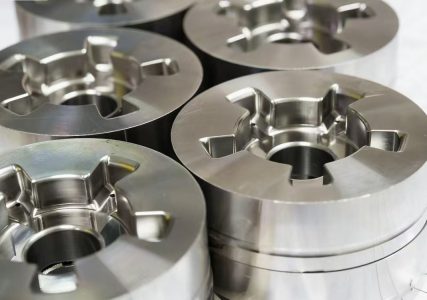
What Is Precision Metal Processing? Definition & Core Fundamentals
Defining Precision Metal Processing for 2026
It refers to a suite of advanced manufacturing techniques designed to shape, cut, form, finish, and assemble metal components with extremely high accuracy, consistency, and repeatability. Unlike conventional metalworking, which often prioritizes speed over precision, this process focuses on achieving tight dimensional tolerances—typically within micrometers—and superior surface finishes, ensuring that every part produced matches the exact specifications of the original design. In 2026, this technology has evolved beyond niche applications to become a critical enabler for mass production, custom manufacturing, and high-performance products across multiple industries.
At its core, this process is about minimizing variation, reducing waste, and optimizing every step of the production process—from initial design and material selection to final inspection. This level of precision is made possible by advanced equipment, digital integration, and skilled engineering, all of which work together to deliver parts that are not only accurate but also durable, reliable, and cost-effective. For businesses in automotive, home appliance, and medical device manufacturing, it is not just a manufacturing method; it’s a competitive advantage that ensures product quality and customer satisfaction.
Core Principles That Govern Precision Metal Processing
To achieve consistent, high-quality results, this process adheres to several fundamental principles that set it apart from traditional metalworking:
-
Extreme Dimensional Accuracy: Parts are manufactured to tight tolerances, often between ±0.001 mm and ±0.01 mm, ensuring perfect fit and function when assembled into larger products. This level of accuracy is critical for components that interact with other parts, such as automotive engine components or medical device parts.
-
Superior Surface Finish: Precision Metal Processing produces parts with smooth, consistent surfaces that reduce friction, improve durability, and enhance the overall aesthetic appeal of the final product. This is particularly important for consumer-facing appliances and medical devices, where surface quality directly impacts user experience and safety.
-
Repeatability & Consistency: Every unit in a production run must match the next, ensuring interchangeability and reliability. This is essential for mass production, where even minor variations can lead to assembly issues, product failures, and increased costs.
-
Material Efficiency: Precision Metal Processing minimizes material waste by optimizing cutting paths, reducing scrap, and maximizing the use of raw materials. This not only lowers production costs but also supports sustainability goals, a growing priority for businesses and consumers alike in 2026.
-
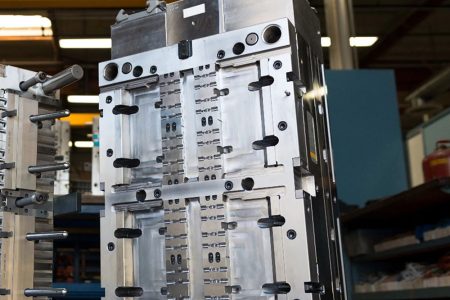
Digital Integration: Modern Precision Metal Processing leverages CAD/CAM software, automation, and real-time monitoring to link design directly to production. This digital integration reduces human error, speeds up production times, and allows for greater flexibility in customizing parts.
Key Technologies & Processes in Precision Metal Processing
It encompasses a range of advanced technologies and processes, each tailored to specific applications, materials, and precision requirements. In 2026, these technologies have become more advanced, efficient, and accessible, enabling manufacturers to produce complex parts with unprecedented accuracy. Below are the most critical processes driving this field today:
CNC Machining – The Backbone of Precision Metal Processing
CNC (Computer Numerical Control) machining remains the most widely used technology in this field. Modern 3-axis, 4-axis, and 5-axis CNC machines use computer programming to execute complex cuts, drills, mills, and turns with minimal human intervention. These machines are equipped with high-speed spindles, precision linear guides, and closed-loop feedback systems that maintain micron-level accuracy even during long production runs.
CNC machining is versatile and can handle a wide range of metals, including aluminum, stainless steel, alloy steels, and titanium. It is ideal for producing complex components such as automotive transmission parts, appliance structural components, and medical device housings. At Huazhi Mould, we invest in state-of-the-art CNC machining equipment to ensure that our services meet the highest standards of accuracy and efficiency. Learn more about our capabilities at https://www.huazhimould.com/wp-admin.
EDM & Wire EDM for Intricate Precision Metal Processing
Electrical Discharge Machining (EDM) and Wire EDM are essential technologies for this process, particularly for parts that are too small, hard, or complex for traditional cutting tools. These processes use controlled electrical sparks to erode metal without mechanical force, enabling ultra-fine details, deep narrow features, and tight tolerances that would be impossible with standard machining.
Wire EDM, in particular, is ideal for cutting complex shapes and thin-walled parts, making it a staple in precision tooling and mold making. This technology is critical for producing high-quality molds, which are essential for injection molding processes used in automotive, home appliance, and medical device manufacturing. By integrating EDM and Wire EDM into our services, Huazhi Mould can deliver molds and components that meet the most demanding specifications.
Precision Grinding & Honing for Superior Surface Quality
Grinding and honing are finishing processes that play a vital role in this field, delivering exceptional surface finishes and dimensional stability. These processes refine the surface of metal parts to achieve smoothness levels (Ra) as low as 0.8 μm, correcting minor distortions from earlier machining operations and ensuring flatness, roundness, and parallelism.
Precision grinding is used for parts such as hydraulic components, bearing parts, and mold cores, where surface quality and dimensional accuracy are critical. Honing, on the other hand, is used to improve the internal surface of cylindrical parts, such as engine cylinders and medical device tubes. Together, these processes ensure that parts produced through this method meet the strictest surface quality standards, enhancing performance and durability.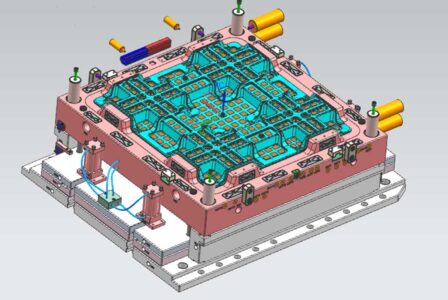
Laser Cutting & Precision Forming in Modern Precision Metal Processing
Modern laser cutting technology has revolutionized this field, offering clean, burr-free cuts with minimal heat distortion. Laser systems can cut thin sheets and complex profiles with high accuracy, making them ideal for automotive interiors, appliance panels, and medical device casings. When paired with precision bending and forming, laser processing enables rapid production of consistent, high-accuracy parts that meet the unique needs of different industries.
Precision forming techniques, such as deep drawing and stamping, complement laser cutting by shaping metal into complex 3D forms without compromising accuracy. These processes are widely used in the production of automotive components, such as battery housings and interior panels, as well as home appliance parts, such as refrigerator shelves and washing machine drums. By combining laser cutting and precision forming, Huazhi Mould delivers solutions that are both efficient and versatile.
Injection Molding & Mold Manufacturing – A Key Application of Precision Metal Processing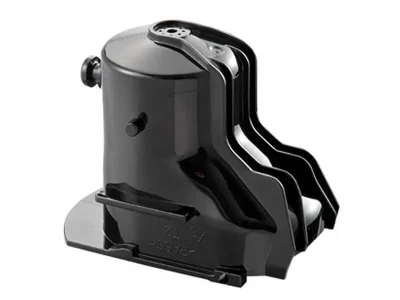
While injection molding is often associated with plastics, it relies heavily on this process for the production of high-quality molds. Precision metal molds ensure consistent part geometry, smooth surfaces, and reliable production cycles—critical for automotive, home appliance, and medical device components. At Huazhi Mould, we specialize in designing and manufacturing small to large injection molds, integrating this technology into every step of the mold production process.
Our team uses advanced techniques to produce mold cores, cavities, and other components with tight tolerances, ensuring that the final injection-molded parts meet the exact specifications of our clients. Whether it’s a small medical device mold or a large automotive mold, our capabilities enable us to deliver molds that are durable, efficient, and cost-effective. Visit https://www.huazhimould.com/wp-admin to explore our mold manufacturing and related services.
Materials Used in High-Performance Precision Metal Processing
The success of this process depends heavily on selecting the right materials for the application. Different metals have unique properties—such as strength, corrosion resistance, and machinability—that make them suitable for specific industries and parts. In 2026, it supports a wide range of metals, each chosen to balance performance, cost, and manufacturability. Below are the most common materials used in this field:
Common & Advanced Metals for Precision Metal Processing
-
Aluminum Alloys: Lightweight, corrosion-resistant, and easily machined, aluminum alloys are widely used in automotive and home appliance parts. They are ideal for components that require strength without added weight, such as automotive body panels and appliance frames.
-
Stainless Steel: Known for its durability, hygiene, and corrosion resistance, stainless steel is essential for medical devices, food-grade appliances, and automotive components that are exposed to harsh environments. Its biocompatibility makes it a top choice for surgical instruments and implantable medical parts.
Alloy & Tool Steels: These metals offer high strength, wear resistance, and dimensional stability, making them ideal for molds, gears, and structural components. Tool steels are particularly important in this field for mold manufacturing, as they can withstand high temperatures and repeated use.
-
Brass & Copper: Brass and copper deliver excellent electrical conductivity and formability, making them suitable for electrical connectors, wiring, and precision fittings. They are commonly used in automotive and electronic components, where conductivity and reliability are critical.
-
Titanium & High-Performance Alloys: These metals offer an exceptional strength-to-weight ratio and biocompatibility, making them ideal for medical implants, aerospace components, and advanced automotive systems. While more expensive, their unique properties make them essential for high-performance applications.
Material Selection for Successful Precision Metal Processing
Choosing the right material for this process is a critical decision that impacts manufacturability, performance, and cost. Several factors must be considered when selecting a material, including:
-
Required Tolerance & Surface Finish: Some materials are easier to machine to tight tolerances than others. For example, aluminum is more machinable than titanium, making it a better choice for parts that require high precision without excessive cost.
-
Operating Environment: Parts that will be exposed to moisture, chemicals, or high temperatures require materials with strong corrosion resistance and thermal stability, such as stainless steel or titanium.
-
Strength & Wear Requirements: Components that will be subjected to high stress or repeated use, such as mold cores or automotive gears, require materials with high strength and wear resistance, such as alloy steels.
-
Production Volume & Lead Time: High-volume production runs may benefit from more machinable materials that reduce production time and cost, while low-volume, custom parts may allow for more expensive, high-performance materials.
-
Regulatory Compliance: Medical devices and automotive components must meet strict regulatory standards, which may require specific materials (e.g., biocompatible metals for medical implants).
At Huazhi Mould, our team of engineering experts helps clients select the optimal material for their projects, balancing performance, cost, and manufacturability to ensure the best possible results.
Critical Industry Applications of Precision Metal Processing
It is a versatile technology that supports a wide range of industries, each with unique requirements and challenges. In 2026, its applications continue to expand as industries demand higher precision, better performance, and more reliable products. Below are the key industries that rely on this process:
Automotive Industry – Safety & Efficiency Through Precision Metal Processing
The automotive industry is one of the largest users of this process, relying on it to produce components that ensure safety, efficiency, and reliability. Modern vehicles—including electric and hybrid models—require precision parts for engine systems, transmissions, steering components, battery housings, and thermal management systems. Tight tolerances and consistent quality are critical for these components, as even minor variations can lead to reduced fuel efficiency, increased emissions, or safety hazards.
It enables the production of lightweight, high-strength components that reduce vehicle weight and improve fuel efficiency. It also ensures that components such as gears, bearings, and connectors fit perfectly, reducing friction and extending the life of the vehicle. Huazhi Mould provides related services for automotive mold manufacturing, delivering molds that produce high-quality automotive components for leading brands.
Home Appliances – Durability & Performance with Precision Metal Processing
Home appliances such as washing machines, refrigerators, ovens, and kitchen equipment rely on this process for components that are durable, efficient, and aesthetically pleasing. Precision parts such as motor components, gears, frames, and exterior panels must meet strict quality standards to ensure long service life, quiet operation, and energy efficiency.
For example, this process is used to produce the gears and bearings in washing machines, ensuring smooth operation and reducing noise. It is also used to manufacture refrigerator shelves and door panels, ensuring a perfect fit and finish. Huazhi Mould’s capabilities support the production of high-quality molds for home appliance components, helping our clients deliver reliable, consumer-friendly products.
Medical Devices – Precision That Saves Lives
The medical device industry demands the highest standards of this process, as components directly impact patient safety and treatment outcomes. Surgical instruments, implantable devices, diagnostic equipment, and medical device housings all require micron-level accuracy, biocompatibility, and cleanability. Even small deviations in precision can compromise the performance of a medical device, leading to serious health risks.
It enables the production of tiny, complex components such as surgical blades, implantable screws, and diagnostic sensors. It also ensures that these components are made from biocompatible materials that do not react with the human body. Huazhi Mould has extensive experience in this field for medical device molds, delivering molds that meet the strict regulatory standards of the medical industry.
Electronics & Industrial Equipment
The electronics and industrial equipment industries rely on this process for components that are compact, reliable, and high-performing. Precision parts such as connectors, heat sinks, shielding components, and structural parts are essential for electronic devices, industrial machinery, and automation systems. As devices become smaller and more powerful, the demand for high-precision metal components continues to grow.
It ensures that electronic components fit into compact designs while maintaining electrical conductivity and thermal stability. It also produces industrial equipment parts that can withstand harsh operating conditions, such as high temperatures and heavy loads. Huazhi Mould’s services support these industries, delivering components that meet the unique needs of electronic and industrial applications.
Quality Control & Standards for Precision Metal Processing
Quality control is the cornerstone of this process, as even minor deviations from specifications can render a part useless or unsafe. In 2026, advanced quality control technologies and international standards ensure that it meets the highest levels of consistency and reliability. Below are the key aspects of quality control in this field:
Measurement & Inspection in Precision Metal Processing
Advanced measurement and inspection tools are essential for verifying the accuracy and quality of parts produced through this process. These tools include:
-
Coordinate Measuring Machines (CMMs): These machines use laser or touch probes to measure the dimensions of parts with micron-level accuracy, ensuring they meet design specifications.
-
Laser Scanning & Optical Profilometers: These tools capture 3D images of parts, allowing for detailed inspection of surface finish, shape, and dimensional accuracy.
-
Surface Roughness Testers: These devices measure the smoothness of a part’s surface, ensuring it meets the required surface finish standards.
-
Automated Optical Inspection (AOI) Systems: These systems use cameras and software to detect defects in parts, such as scratches, dents, or dimensional errors, during production.
At Huazhi Mould, we implement a rigorous quality control process that includes first-article inspection, in-process checks, and final audits. This ensures that every part produced through our services meets the strictest quality standards.
International Standards for Precision Metal Processing
Global manufacturers follow strict international standards to ensure that this process meets industry and regulatory requirements. These standards include:
ISO 9001: A quality management system standard that ensures consistent quality across all aspects of production, including this process.
IATF 16949: A quality standard specific to the automotive industry, ensuring that this process meets the unique requirements of automotive manufacturing.
ISO 13485: A quality standard for medical device manufacturing, ensuring that this process meets the strict regulatory requirements of the medical industry.
Customer-Specific Specifications: Many clients have their own quality standards, which we adhere to through customized solutions.
Compliance with these standards confirms that this process meets the highest levels of quality, reliability, and safety, making it a trusted choice for industries worldwide.
Trends Shaping Precision Metal Processing in 2026
The field of this process is constantly evolving, driven by technological advancements, changing industry demands, and global trends. In 2026, several key trends are shaping its future, making it more efficient, accurate, and sustainable:
Smart Factories & Digitalization in Precision Metal Processing
The rise of smart factories and digitalization is transforming this process. Automation, IoT sensors, and real-time data analytics are being integrated into production lines to optimize processes, reduce errors, and improve efficiency. Digital twins—virtual replicas of production processes—allow manufacturers to simulate and optimize it before cutting metal, reducing waste and lead times.
At Huazhi Mould, we embrace digitalization by using advanced CAD/CAM software, automated machining equipment, and real-time monitoring systems to enhance our capabilities. This digital integration allows us to deliver faster, more accurate, and more cost-effective solutions to our clients.
Sustainable & Efficient Manufacturing in Precision Metal Processing
Sustainability is a growing priority for businesses worldwide, and this process is no exception. In 2026, manufacturers are focusing on reducing energy consumption, minimizing waste, and using eco-friendly materials in it. Advanced processes such as dry machining reduce the use of cutting fluids, while closed-loop material systems recycle scrap metal, reducing environmental impact.
Huazhi Mould is committed to sustainable practices, implementing energy-efficient equipment, reducing scrap, and using eco-friendly materials whenever possible. This not only benefits the environment but also lowers production costs for our clients.
Advanced Materials & Hybrid Processes in Precision Metal Processing
The development of new advanced materials—such as high-strength alloys, composites, and biocompatible metals—is expanding the capabilities of this process. These materials offer improved strength, durability, and performance, enabling the production of parts that were previously unachievable. Hybrid processes—such as combining CNC machining with additive manufacturing—are also gaining popularity, allowing for the production of complex, lightweight parts with high precision.
Customization & Rapid Prototyping in Precision Metal Processing
In today’s fast-paced market, businesses need to iterate quickly and adapt to changing customer demands. This process supports customization and rapid prototyping, allowing manufacturers to produce small batches of custom parts quickly and cost-effectively. Quick-change tooling and flexible production lines enable businesses to switch between different parts and designs without significant downtime, supporting agile product development.
Why Choose Huazhi Mould for Your Precision Metal Processing Needs
When it comes to this process, choosing the right partner is critical to the success of your project. Huazhi Mould is a professional enterprise specializing in the design and manufacturing of small to large injection molds, with extensive experience in this field for automotive, home appliance, and medical device industries. Here’s why manufacturers worldwide choose us for their related needs:
Advanced Technology & Equipment: We invest in state-of-the-art CNC machines, EDM systems, laser cutting equipment, and quality inspection tools to ensure that our services meet the highest standards of accuracy and efficiency. Our equipment is regularly updated to keep up with the latest technological advancements in this field.
Expert Engineering Team: Our team of skilled engineers and technicians has years of experience in this field and mold manufacturing. They work closely with clients to understand their needs, optimize designs for manufacturability, and deliver customized solutions that meet exact specifications.
Full-Service Capabilities: From initial design and material selection to this process, mold manufacturing, and final inspection, we offer end-to-end solutions that streamline your supply chain and reduce lead times. Our one-stop approach ensures that your project is handled efficiently and effectively from start to finish.
Uncompromising Quality Control: We implement a rigorous quality control process at every stage of this process, using advanced inspection tools and adhering to international standards. This ensures that every part and mold we produce is accurate, reliable, and meets your quality requirements.
-
Customer-Centric Partnership: We prioritize customer satisfaction, working closely with you to meet tight deadlines, control costs, and address any challenges that arise. Our dedicated customer service team is available to answer your questions and provide updates throughout the project.
Proven Industry Experience: We have extensive experience serving automotive, home appliance, and medical device clients, understanding the unique requirements and challenges of each industry. Our track record of delivering high-quality solutions speaks for itself.
When you choose Huazhi Mould, you choose a partner dedicated to excellence in this field. We are committed to helping you build better products, gain a competitive advantage, and succeed in 2026 and beyond. Learn more about our capabilities and how we can support your project at https://www.huazhimould.com/wp-admin.
FAQ About Precision Metal Processing
What is the difference between conventional metalworking and Precision Metal Processing?
Conventional metalworking focuses on general shaping and cutting of metal with looser tolerances, prioritizing speed and cost over precision. This process, on the other hand, is designed to achieve extremely tight dimensional tolerances (often within micrometers), superior surface finishes, and consistent repeatability. It uses advanced equipment, digital integration, and strict quality control to ensure that every part meets exact design specifications, making it ideal for high-performance applications.
What tolerances can Precision Metal Processing achieve in 2026?
Modern techniques can achieve tolerances ranging from ±0.001 mm to ±0.01 mm, depending on the material, part complexity, and processing technology. For critical applications such as medical devices and automotive components, tolerances can be even tighter, ensuring perfect fit and function.
Which industries rely most on Precision Metal Processing?
The industries that rely most on this process include automotive, medical devices, home appliances, electronics, and aerospace. These industries require high-precision components that meet strict quality, safety, and performance standards, making it an essential technology.
How does Precision Metal Processing improve product quality?
This process improves product quality by ensuring consistent dimensional accuracy, superior surface finishes, and reliable repeatability. This reduces assembly issues, improves part durability, lowers failure rates, and enhances the overall performance of the final product. For example, in automotive manufacturing, it ensures that engine components fit perfectly, reducing friction and improving fuel efficiency.
How long does a typical Precision Metal Processing project take?
The timeline for a project varies depending on the complexity of the part, production volume, material, and processing technology. Simple parts with low production volumes may take a few days, while complex parts or high-volume production runs can take several weeks. At Huazhi Mould, we provide clear timelines upfront and work efficiently to meet your deadlines.
Can Precision Metal Processing support sustainable manufacturing?
Yes, this process can support sustainable manufacturing. Advanced processes reduce material waste by optimizing cutting paths and recycling scrap metal. Energy-efficient equipment lowers energy consumption, while eco-friendly cutting fluids and materials reduce environmental impact. At Huazhi Mould, we prioritize sustainability in our services, helping our clients reduce their carbon footprint.
What materials can be used in Precision Metal Processing?
This process supports a wide range of materials, including aluminum alloys, stainless steel, alloy steels, brass, copper, titanium, and high-performance alloys. The choice of material depends on the application, required tolerance, surface finish, and regulatory requirements.
Conclusion
It is more than just a manufacturing technique—it is the foundation of modern, high-performance products across automotive, home appliance, medical, and electronic industries. In 2026, this technology continues to evolve, driven by digitalization, sustainability, and advanced materials, offering unprecedented accuracy, efficiency, and versatility. Whether you need custom mold components, high-precision metal parts, or end-to-end manufacturing support, understanding it is key to staying competitive in today’s market.
The success of your project depends on choosing the right partner—one with the technology, expertise, and commitment to quality to deliver exceptional results. Huazhi Mould combines advanced equipment, skilled engineering, and strict quality control to provide solutions that meet the most demanding specifications. With our focus on customer satisfaction and industry experience, we are your trusted partner for all your related needs.
Call to Action
Are you ready to elevate your products with high-quality services? Whether you need precision mold components for automotive, home appliance, or medical applications, Huazhi Mould is here to help. Contact us today to discuss your project, request a quote, or learn more about our capabilities. Let’s work together to create precision-driven solutions that set your business apart—visit https://www.huazhimould.com/wp-admin or reach out to our team now to get started!